BYD Atto 3 Evo Review: Big Battery and 220 kW Charging Under Familiar Looks

Summary
The BYD Atto 3 Evo hides major upgrades beneath unchanged sheet metal, including a larger 74.8 kWh battery and faster 220 kW charging. Real-world testing confirms strong performance, though steering vibration at highway speeds remains a concern.
Some facelifts require you to park two cars side by side in order to spot the differences. Others, however, conceal an entirely new vehicle beneath practically unchanged sheet metal. The BYD Atto 3 Evo clearly falls into the second category.
Its predecessor, the Atto 3, had two major weaknesses. It had maximum charging power of 110 kW – already subpar in 2023 – and featured a diminutive 60.5 kWh battery that drained quickly on the motorway. Everything else about the model was competitive: space, build quality, equipment, and price.
BYD openly acknowledged these weaknesses and has since addressed them directly with the Evo. The result: a 74.8 kWh battery, 220 kW charging power, and a drivetrain that has shifted from the front to the rear axle. On paper, this represents a significant leap forward. On the road, it delivers – across most driving scenarios.
Following an initial test drive in April by my colleague Daniel Bönnighausen, my vehicle was the BYD Atto 3 Evo Design; the variant with a single motor on the rear axle, finished in Atlantis Blue. During that one-day test drive in April, two aspects of the vehicle raised questions: noticeable vibrations in the steering wheel from around 105 km/h, and a charging speed that BYD promised but no one had yet verified. I was able to test both over two weeks and many more kilometres.
| BYD Atto 3 Evo Design | BYD Atto 3 Evo Excellence | |
|---|---|---|
| Drivetrain | Rear-wheel drive (RWD) Single motor at the rear | All-wheel drive (AWD) Dual motors |
| Power | 230 kW (313 hp) | 330 kW (440 hp) |
| Torque | 380 Nm | 560 Nm |
| Acceleration | 5.5 s | 3.9 s |
| Top speed | 180 km/h | 200 km/h |
| Battery capacity (net) | 74.8 kWh BYD Blade Battery Lithium iron phosphate (LFP) | 74.8 kWh BYD Blade Battery Lithium iron phosphate (LFP) |
| Range (WLTP) | 510 km | 470 km |
| Combined consumption (WLTP) | 16.4 kWh/100 km | 17.8 kWh/100 km |
| DC charging power | 220 kW | 220 kW |
| DC charging time (10–80 %) | 25 min | 25 min |
| AC charging power | 11 kW (three-phase) | 11 kW (three-phase) |
| AC charging time (0–100 %) | 8 hrs | 8 hrs |
| Vehicle to Load (V2L) | 3 kW, standard | 3 kW, standard |
| Curb weight | 1,880 kg | 1,990 kg |
| Gross vehicle weight | 2,410 kg | 2,520 kg |
| Boot volume | 490 to 1,360 litres | 490 to 1,360 litres |
| Frunk volume | 101 litres | 101 litres |
| Towing capacity (unbraked / braked) | 750 kg / 1,500 kg | 750 kg / 1,500 kg |
| Head-up display | Not available | Standard |
| Panoramic roof | Not available | Standard |
| Rear seat heating | Not available | Standard |
| Base price | €44,990 | €50,990 |
A familiar exterior – but a significantly more refined interior
The BYD Atto 3 Evo’s dimensions remain unaltered: it is 4.46 metres long, 1.88 m wide, and 1.62 m tall, with a wheelbase measuring 2.72 m. When the side mirrors extended, the total width is 2.06 metres – a figure that becomes relevant in tight underground carparks. External updates include redesigned bumpers, slimmer side skirts, a flatter rear spoiler, and a new pattern for the 18-inch aluminium wheels.
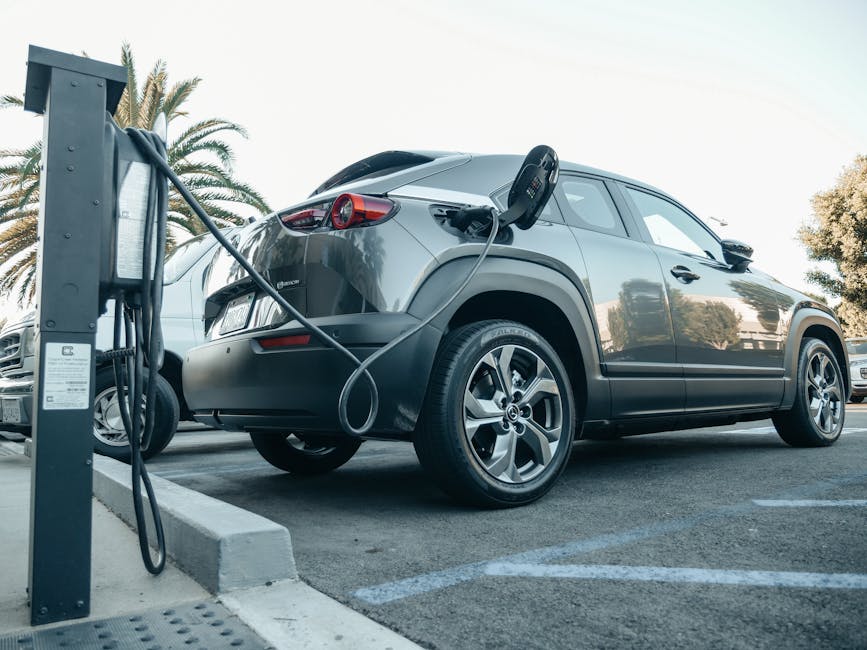
One change in particular, though, adds real everyday value: the charging port is now located at the rear of the vehicle instead of at the front right. In my test car’s colour, Atlantis Blue, the vehicle looks more mature than in other shades from the palette. Any paint finish other than the standard dark blue, Iris Blue, costs an additional €750 .
The BYD Atto 3 (on which the revised Evo platform is based) was also awarded the highest rating of 5 out of 5 stars by Euro NCAP. During testing, the compact eSUV impressed thanks to stable occupant protection, comprehensive driver assistance systems, and excellent child safety.


The most visible improvements lie in the interior. The gear selector has been moved from the centre console to the steering column, which has two effects: firstly, the console appears more streamlined, and secondly, the freed-up space is put to good use. On the upper level of the centre console, there is an inductive charging pad with 50-watt charging power and active cooling, as well as an additional tray for a second smartphone. Below this is an open storage compartment with two USB-C ports (18 and 60 watts). The cooling feature for the charging pad is not just a marketing gimmick. Anyone who has placed their smartphone on an uncooled charging pad in summer with navigation and display active knows how performance throttles after ten minutes. That doesn’t happen here. My only criticism here is trivial yet pertinent: there is only one Qi charging pad.
What stands out is that BYD has significantly improved material quality. There are surfaces with a soft-touch finish, artificial leather, contrast stitching, and microfibre in areas that are frequently touched. Below the line of sight, hard plastic is still used, which is normal for this price range. The rubber bands in the door pockets, which genuinely sound like bass strings when plucked, and the large, round air vents remain. Some may find this quirky. I, however, find it somewhat endearing.
The door handles, on the other hand, require some getting used to. BYD opted for a unique solution that looks appealing but requires a different hand movement than practically every other car. After three days, you adapt. In the first three days, however, you often reach into empty space. If you frequently hand the car over to friends or family, you’ll have to explain it repeatedly.


Storage: 490 litre boot and a substantial frunk
The boot offers 490 litres of storage space, which is 50 litres more than the predecessor. With the rear seats folded down in a 40:60 split, the volume increases to 1,360 litres. Since there is no engine under the bonnet, there is an additional 101 litre frunk. This is not a given in this class and is the perfect place to store charging cables that would otherwise clutter the boot. The tailgate opens electrically, and an aluminium roof rail is standard at least in the Excellence trim.
Inside, the rear benefits most from the cell-to-body construction, where the battery is integrated as a structural component into the body, and its upper side forms the vehicle floor. The result is a completely flat floor, which significantly improves the middle rear seat. Headroom is sufficient even for tall passengers. However, legroom becomes tighter for those over 1.85 metres than the spacious feel initially suggests. Even in the front, the footwell on the driver’s side is narrower than one would expect given the wheelbase.


Controls: BYD pushes the right buttons
The control concept is primarily display-driven. A 15.6-inch touchscreen dominates the centre, and an 8.8-inch digital instrument cluster sits behind the steering wheel. The large screen can no longer be rotated into portrait mode in this generation, but I didn’t miss that feature. The infotainment system relies on integrated Google services: Google Maps for navigation, the Play Store for apps, and the Google Assistant for voice control. Additionally, BYD’s own cloud-based voice assistant can be activated with the phrase “Hi BYD”.
What is crucial, however, is what BYD has not moved the display. The air vents are operated via physical rotary controls. The fan speed can be adjusted without taking your eyes off the road. Equally important are the physical buttons in the centre console for driving mode, hazard lights, Auto Hold, and volume. Some manufacturers have eliminated these controls in recent years and are now backtracking.


One of the most practical buttons in the entire car is located on the left side of the steering wheel and activates the camera view. It does this instantly, without the several-second delay common in many systems. In the city, where parking spaces are rarely generous, I pressed this button probably a hundred times. The 360-degree view with an additional wheel camera and front and rear parking sensors are standard in both trims.
Two points still bother me, though. First, the active driving mode is only displayed as a small icon in the driver display. The text appears briefly when switching and then disappears. Fortunately, the previously set driving mode remains active after each restart – something those who always drive in Sport mode might appreciate.
Second, while the automatic climate control cools down quickly, it sometimes feels too strong. On a 30-degree day, the interior was noticeably below a comfortable level after a few minutes with the temperature set to 21 degrees. The same applies to the seat ventilation: even on the lowest of three settings, the effect is powerful. Those sensitive to this should test it consciously during a test drive. Too much cooling power is a far more pleasant problem than too little, but it remains a problem.


Driver assistance systems: ACC and ICC perform well
The BYD Atto 3 Evo comes with a full suite of driver assistance systems in both variants. Standard features include both adaptive and intelligent cruise control for combined longitudinal and lateral guidance. Additionally, there’s blind-spot monitoring, front and rear cross-traffic alert, emergency brake assist, lane-keeping assist, and a door-opening warning.
The ICC function can be activated via buttons on the steering wheel. BYD has done an excellent job here. One press is all it takes, followed by a twist of the dial to set the desired speed. The lane-keeping itself works flawlessly: even in long motorway curves and with faint road markings, the car stays neatly centred. The longitudinal guidance is more mixed. When accelerating after overtaking or from a deceleration, the system occasionally operates jerkily instead of smoothly building up power. It’s not uncomfortable, but it’s not particularly elegant either.
The most obvious weak point is the traffic sign recognition. It does not reliably detect speed limits and sometimes misses repeals. This confirms exactly what was observed during the first test drive in April. It seems like a software issue rather than a hardware problem, which makes it fixable.


Drivetrain: 230 kW at the rear axle and a speedometer that overdelivers
The switch from front- to rear-wheel drive is the most technically bold decision in this car. The predecessor had 150 kW at the front axle. In the Atto 3 Evo Design, a permanently excited synchronous motor sits at the rear axle, delivering 230 kW and 380 Newton-metres of torque. This enables acceleration from 0 to 100 km/h in 5.5 seconds. For context: the BYD Atto 3 Evo Design accelerates faster than the latest-generation Golf GTI (5.9 seconds) and is significantly cheaper after discounts.
BYD states a top speed of 180 km/h for the Design and 200 km/h for the Excellence. However, my Design test car easily reached 205 km/h according to the speedometer. The same was observed in the test car during the first drive. Two vehicles, same behaviour. It is therefore more likely that the speed limiter in series production is simply not set as stated in the specifications, rather than this being an isolated case.
One drawback of the BYD Atto 3 Evo, however, is its regenerative braking concept. There are only two levels, and the stronger of the two is not particularly strong. The Atto 3 Evo does not support one-pedal driving, meaning you cannot drive almost exclusively via the accelerator pedal to a standstill. For a battery-electric vehicle of this model year, this is an unusual omission. The standard Comfort Stop function softens this in urban traffic by making stops smoother, but it does not replace true one-pedal driving. Those accustomed to it will miss it. However, drivers switching from a combustion engine will hardly notice and may even adapt more quickly. At least activating the Sport Brake Assistant increases the initial braking force.
The maximum towing capacity of the BYD Atto 3 Evo is 1,500 kilograms braked and 750 kilograms unbraked. This is a good figure for a battery-electric vehicle of this size and makes the Atto 3 Evo suitable for trailers, small caravans, or bike racks.


Driving dynamics and handling: corner carefully
One thing that’s more important than acceleration time for everyday driving is how the available power feels. Here, rear-wheel drive is a real gain. The car no longer pulls on the steering during acceleration out of corners, and the typical front-wheel-drive tyre scrub on wet roads is a thing of the past. Additionally, the rear axle has been revised: instead of the previous four-link design, a five-link axle is now used, while the front retains MacPherson struts.
The suspension is tuned firmly overall. On smooth tarmac, the car sits securely and steers precisely. On poor country roads and cobblestones, however, there is more feedback than I would like. Expansion joints and speed bumps are clearly noticeable. Those switching from a comfortably tuned compact car will find it too harsh in the first week. Ultimately, it’s a matter of taste, best clarified during a test drive.
Regarding the steering wheel vibrations described during the first test drive at around 105 km/h: we’re all clear. My test car showed no such issues over two weeks at any speed. This suggests it was likely a wheel imbalance in an individual vehicle rather than a design issue. Nevertheless, this point should be on the test drive checklist.
What I can confirm, however, are the wind noises. Up to about 120 km/h, the interior remains pleasantly quiet. Beyond 130 km/h, the noise from the side mirrors and A-pillar increases noticeably. On country roads and in the city, however, hardly any outside noise is audible. Those who spend at least two hours per day on the motorway should factor this into their purchase decision.
Additionally, the vehicle tends to float noticeably in curves at high speeds on the motorway. On winding country roads, however, it is genuinely fun to drive in Sport mode with the sport steering activated. But it’s clear that the car is not designed for highly sporty driving. The Atto 3 Evo prefers to glide along relaxed. Yet, you always feel safe in this compact SUV.


Consumption and range: 15.2 kWh in the city, 22 kWh on the motorway
Over the entire two weeks and across all driving profiles, my test consumption averaged 17.7 kWh/100 km. This is a solid but not outstanding figure for a car of this size. BYD states 16.4 kWh according to WLTP, so the gap to real-world figures is pleasantly small. Many competitors are less realistic.
The extremes are also interesting. In pure city traffic, I achieved around 15.2 kWh, which is really good for a 1.88-tonne vehicle with 230 kW. On the motorway at brisk cruising speeds, it was around 22 kWh. The difference of almost six kilowatt-hours between these driving profiles is expected for an SUV with this frontal area.
Now, let’s talk about range. BYD claims 510 km under WLTP. My best real-world figure was 485 km, achieved in a week with mostly city and country road driving. Based on my test average of 17.7 kWh, the 74.8 kWh battery delivers around 420 km. Those who mostly drive on the motorway and assume 22 kWh consumption can expect about 340 kilometres of range.


Charging: the biggest improvement
If you had to justify the ‘Evo’ suffix (likely for Evolution or advancement) for this car, this would be the reason. The old BYD Atto 3 charged at a maximum of 110 kW and took about 44 minutes for a 10 to 80 percent charge. The Atto 3 Evo is rated at 220 kW and 25 minutes. In my test, the peak even briefly reached 225 kW, though only for a few moments. What matters is the overall charging curve, and it delivers: 10 to 80 per cent in about 23 to 24 minutes at an average of 130 kW is realistic under perfect conditions and even slightly faster than the manufacturer’s claim.
This is technically noteworthy because BYD refers to an 800-volt architecture, yet the battery’s nominal voltage is 499.2 volts. However, this is not a contradiction but a matter of terminology: what matters for charging speed is how much current the system can handle at what voltage. BYD uses a high-voltage architecture that exceeds the traditional 400 volts. This almost doubles the charging power without pushing currents into a range where cables and converters suffer.
The battery can be preconditioned manually and automatically. This is particularly crucial in winter at the charging station. In practice, this means: if you plan your route via the built-in navigation, you’ll arrive at the charger with a pre-warmed battery. If you set off spontaneously, you should use the manual preconditioning. Unfortunately, it is somewhat hidden in a submenu.
For AC charging, the three-phase onboard charger remains at 11 kW. A full charge thus takes a good eight hours, which is sufficient for a home wall box. The V2L function also comes as standard, allowing external devices to draw up to 3 kW from the vehicle battery. This is very practical for powering a coffee machine at a campsite, a cool box, or power tools on your property.
A look ahead is also relevant here: in May, BYD already unveiled the third generation of the Atto 3 in China. The model, which is called Yuan Plus there, is based on the further-developed e-Platform 3.0 Evo and features the second generation of the Blade Battery with so-called Flash Charging. The claim is 10 to 70 per cent in about five minutes. For European buyers, this is not yet a purchasing consideration, as the model will not be available here until at least 2027, and there are no Flash Chargers in Europe yet. However, it demonstrates the rapid pace at which this vehicle class is evolving.


Equipment and warranty: above average in every respect
Otherwise, the standard equipment is the real trump card. BYD sells the Atto 3 Evo with minimal configuration effort: first, choose between the ‘Design’ and ‘Excellence’ trims, then select the paint and interior colour and you’re done. Both trims come with heated and ventilated front seats, a heated steering wheel, six-way electric seat adjustment for both front seats, dual-zone automatic climate control, a heat pump, a PM2.5 filter, ambient lighting, seven airbags, and eight speakers as standard. The Excellence trim adds a head-up display, heated rear seats, and a panoramic roof. These three features cannot be added to the Design trim, which is the only real drawback of the base version.
BYD also offers a six-year or 150,000 km vehicle warranty, an eight-year or 250,000 km battery warranty with a guaranteed remaining capacity of at least 70 per cent, an eight-year or 150,000 km warranty on the electric drivetrain, and a twelve-year warranty against rust perforation without kilometre limitation. This is above average in the competitive landscape.


Pricing and competitive comparison: highly attractive discounts
Officially, the Atto 3 Evo Design costs €44,990, and the Excellence €50,990. While these figures are worth knowing, they are hardly relevant for the purchasing decision. BYD currently offers a manufacturer discount of €9,000 on the Design model, bringing the real starting price to €35,990. If you factor in the maximum possible government grant of €6,000, the potential final price sits at €29,990 euros. My test car, with the €750 surcharge for Atlantis Blue, comes to €30,740 euros. In Germany, the discount campaign has been extended multiple times by BYD and now runs until 30 September 2026 (link in German). The date of the purchase contract remains decisive for the discount.
However, it’s important to note that the government grant is not available to every buyer in full but is income-dependent. For a fair comparison with the competition, the price after the manufacturer discount – €35,990 euros – should be used.
So how does the car stack up in its segment? The VW ID.3 Neo with the large 79 kWh battery and 210 kW starts at €44,995 euros in the ‘Life’ trim and charges at a maximum of 183 kW. The heat pump costs an extra €1,090, and the navigation system costs 750 euros in the lower trims. Both extras are standard in the BYD. However, the ID.3 Neo has a denser service network, slightly more range, and is manufactured in Zwickau, which may be important for some buyers.
A more uncomfortable competitor for BYD is the Xpeng L03 RWD Long Range. It costs €38,600, combines a 71.2 kWh battery with 180 kW, and achieves up to 520 km of WLTP range. Most importantly, despite its 400-volt technology, it charges at up to 236 kW and completes the 10 to 80 per cent charge in just 20 minutes. This makes it even faster in the discipline where the Atto 3 Evo has made its biggest leap. However, the L03 has only a 367-litre boot, making it less suitable as a family car compared to the BYD.
Finally, the Leapmotor C10 RWD offers the largest battery in the field for €41,900: 81.9 kWh net, 220 kW, and 510 km WLTP range. It charges at a maximum of 180 kW, which is slower than the BYD. At 4.74 metres, it is significantly longer, weighs around 250 kg more at 2,130 kg, and offers only 435 litres of boot space. Those who want fast charging and brisk acceleration are better off with the BYD. (All prices in this article are as of August 2026 and include 19 per cent VAT.)
Conclusion: a whole lot of car for the price
After two weeks with the compact BYD SUV, my verdict is clear: the Atto 3 Evo is more than just a cosmetic facelift, as it addresses precisely the two weaknesses that held its predecessor back in the competition. The biggest advancement in this car is the jump from 110 to a measured 225 kW peak charging power and the reduced charging time from 44 to 23 minutes, which is immediately noticeable in everyday use. The switch to rear-wheel drive also improves driving behaviour, the 74.8 kWh battery makes motorway trips less problematic, and with an average consumption of 17.7 kWh, the efficiency is reasonable for the performance offered.
However, there is also criticism: the traffic sign recognition is somewhat unreliable, and one-pedal driving is absent. The suspension is also somewhat firm, and wind noise becomes more pronounced above 130 km/h than necessary.
If you’re looking for a compact SUV with generous standard equipment, decent space, 1,500 kg towing capacity, and competitive charging speeds – and can do without one-pedal driving – you get a lot of car with the BYD Atto 3 Evo for around €36,000 euros, or €30,000 euros if you qualify for the grant. However, you should take a test drive to check two things that depend on personal preference: the firm suspension and the noise levels at high speeds. Everything else in the specifications holds true.
byd.com (Atto 3 Evo configurator)
Author: Kasimir Hupe


Comments
No approved comments yet. Be the first to comment.
Leave A Reply