New BYD Seagull Grows Up: Bigger, Faster-Charging Budget EV Debuts in China

Summary
BYD launched the redesigned Seagull in China, adding size, power, rear-wheel drive and independent multilink suspension while keeping weight low. The headline feature is Flash Charging that goes from 10-70% in five minutes, bringing gas-station-like speeds to an entry-level EV.
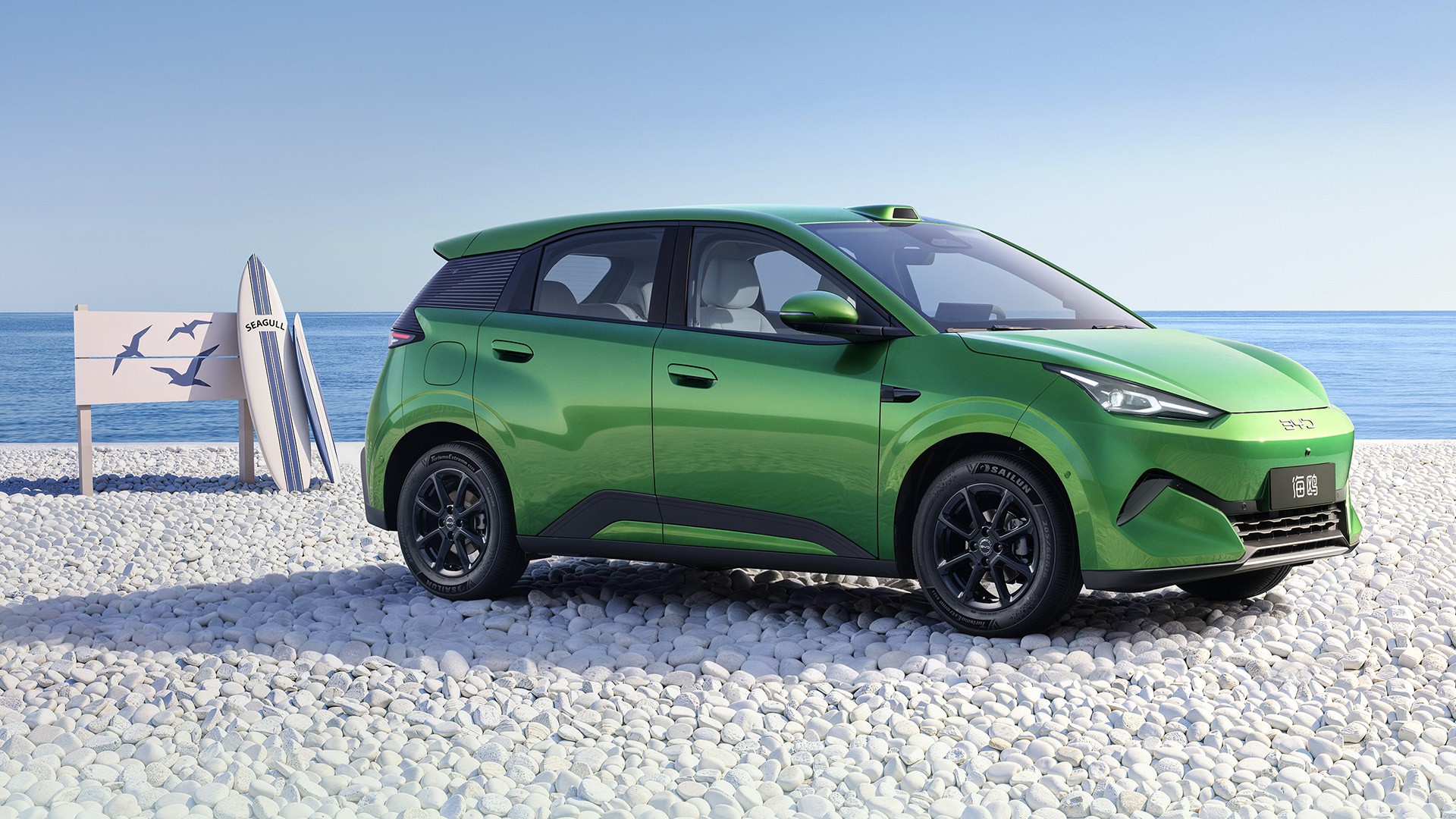
BYD launched the new Seagull in China on Tuesday. BYD’s smallest car is not as small now. The EV adds technology and capability, while retaining much of what made it popular. The value is even stronger now, but the potential impact is bigger than the car itself.
Overall, the car grew in length by 425 mm (16.7”) to 4205 mm. That makes it slightly longer than the Renault Clio, ID.Polo and Geely E2 that I saw in Paris or the E-208 that I drove recently in Sardinia. Height decreases 30 mm (a little over an inch) to 1570 mm, while width increases 95 mm (3.75”) to 1810 mm. Wheelbase increases 150 mm (~6”) to 2650. Meanwhile power increases to 95 kW (127 hp), up from 55 kW in China.
However, despite the larger size, increased power and switch to rear wheel drive with an independent multilink suspension, weight has been kept in check. Entry-level models start at 1180 kg (2601 lbs.) up to 1255 kg (2767 lbs.) for the top spec. That is an increase from 1160 kg to 1240 kg for the 2026 Chinese model, or roughly a couple bags of groceries worth of difference. That also makes it a little lighter than the less powerful Geely E2/EX2 and significantly lighter than the smaller Renault 5 (1,372 kg to 1,449 kg), ID.Polo (1512 kg to 1576 kg) or E-208 (1530 kg). Half a metric ton lighter than a 2027 Chevy Bolt LT (1,713 kg or 3777 lbs.).
Battery capacities for the Chinese market Seagull are virtually identical to before at 30.1 kWh (vs 30.08 kWh) and 39.2-kWh (vs. 38.88 kWh). However, the CLTC ranges on the new models both grow by 15 km to 320 km and 420 km, respectively. BYD claims a class leading 9 kWh per 100 km. While the car has grown in size, the slightly lower height and a longer profile can improve aerodynamics. However, I have a feeling that there were efficiencies found in the powertrain and electronics as well.
Of course, the big news is the availability of Flash Charging, which can take the car from 10-70% in 5 minutes and 10-97% in 9 minutes. While other companies are challenging BYD by claiming a few seconds faster charging, that is on premium vehicles. There is nothing close to the new Seagull in this price class. Charging speeds equivalent to gasoline combine with a proliferating charging network. BYD has already put 12,165 Flash Charging stations in operation so far this year and plans to have 20,000 by the end of the year. For comparison Tesla had 9007 Supercharging stations globally, as of October 1, with 3594 in North America. BYD also offers a free year of unlimited charging with purchase. And that is just part of the 28 million charging facilities planned in China by the end of next year, with an increasing number offering ultra-fast charging. With that speed and convenience of charging, long trips become increasingly convenient without needing to carry around a large, heavy battery.
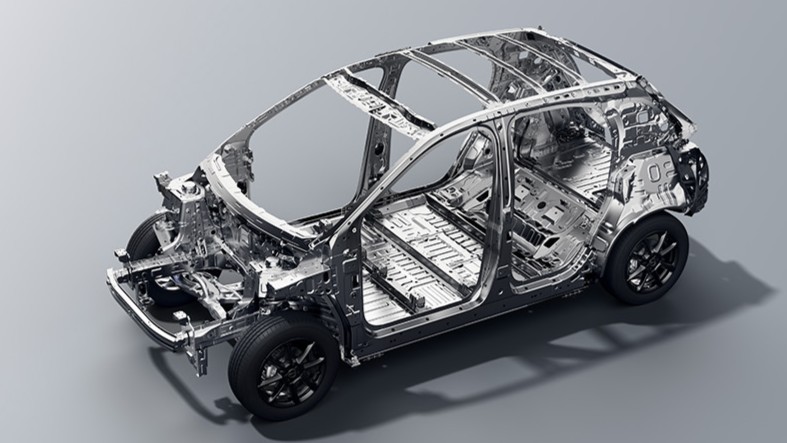
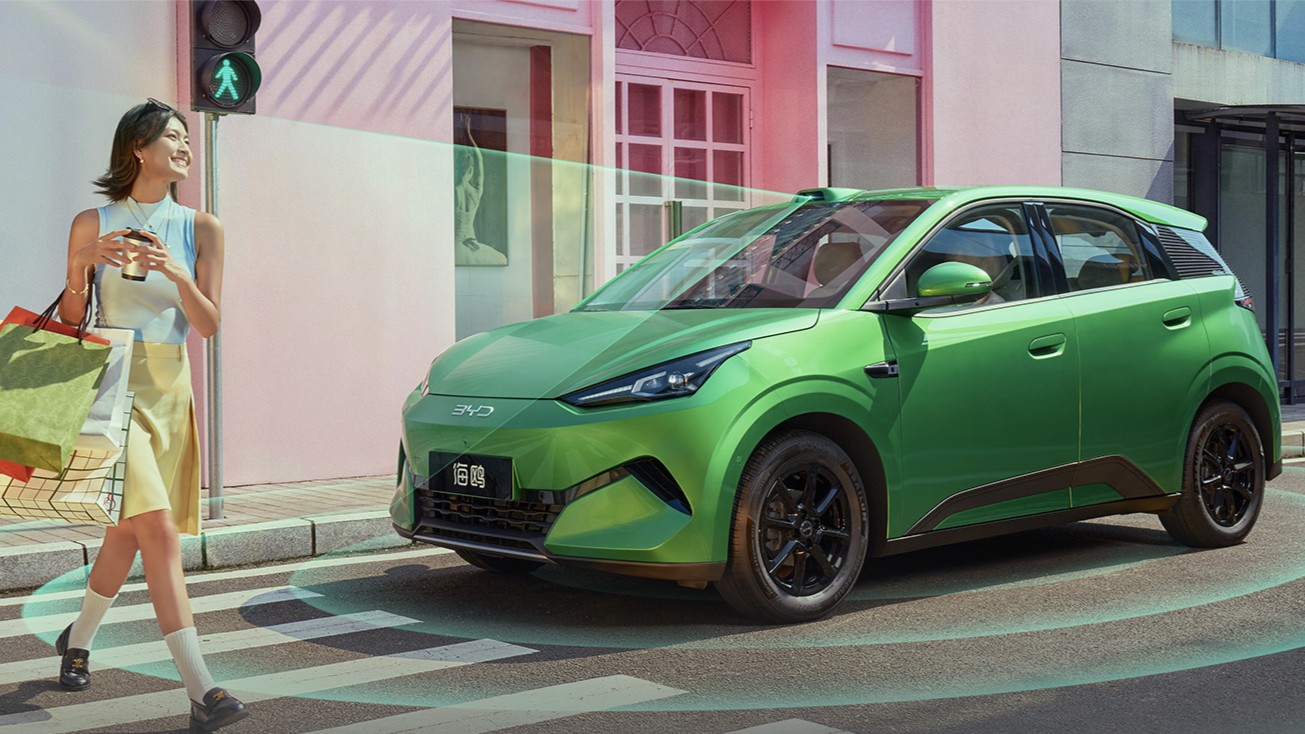
The longer body also helps with safety ratings. While you can make a small car safe, physics has its limitations. Larger crumple zones provide more room to decelerate the vehicle and absorb impacts. As such, this model is unlikely to need the market-specific modified bumpers found in the previous Seagull/Atto 1/Dolphin Surf/Dolphin Mini. In addition, the Seagull offers a full range of active safety features not typically seen at this price point, including LiDAR-equipped God’s Eye intelligent driving system on some trims. However, they will need approval under new UN DCAS regulations before we see them active across global markets.

I thought the original Seagull was attractive for what it was. However, the new car looks sleeker and more grown up inside and out without being stuffy. The rear can now carry two 24” suitcases and two 20” suitcases, and another carryon can now fit in the 94l frunk, with room to spare. 31 storage spaces throughout the car, including 24l of storage space under the rear seats, provide added utility in the small footprint. Speaking of rear seats, there is now a center rear seat that takes advantage of the increased hip room. Power front passenger seats now offer heating and ventilation, with massage on the driver side.
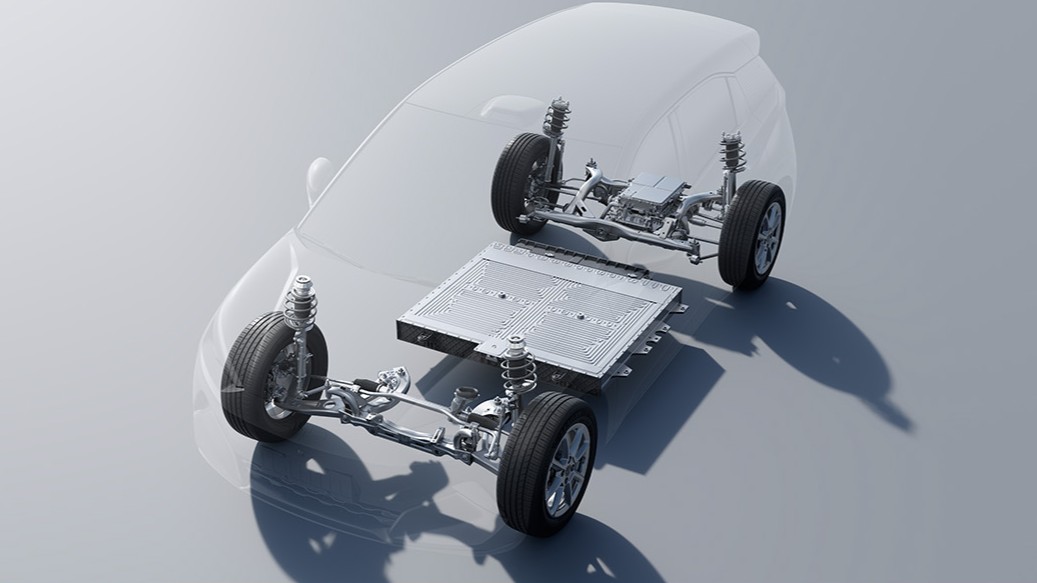
While I haven’t had a chance to drive this car, the multilink suspension and rear wheel drive are poised to transform the handling. The straight steel suspension links at the rear do not look exotic. But the ability to have straight suspension links is efficient, with loads being almost entirely in tension or compression. Keeping suspension links straight also indicates effective communication between engineering teams to ensure adequate clearances for the lightweight components. Up front, the switch to rear wheel drive has enabled greater steering angle, for the same 4.95 m turning radius as before, despite having a longer wheelbase.
Meanwhile, list prices are slightly less than the previous Seagull. Prices start at 65,900 RMB ($9,966 USD at current exchange rates) up to 99,900 RMB ($14,957) for the top spec with the larger battery, God’s Eye intelligent driving and every option included. Flash charging is included on models starting at 75,900 RMB, while the base models are targeted for people who charge at home and include a 7-kW home charging station with installation. In addition, models are launching with a 3000 RMB discount ($449 USD).
We do not know what configurations this vehicle might take outside of China in terms of battery size, motor power, tuning, etc. And we do not know when the new Seagull might make it out of China. But the Seagull has the potential to be a fun but still practical car. The cutaway indicates that a bigger battery could fit and larger motors are available. The previous car was already fun to drive for what it was. This car could set a new standard in its class.
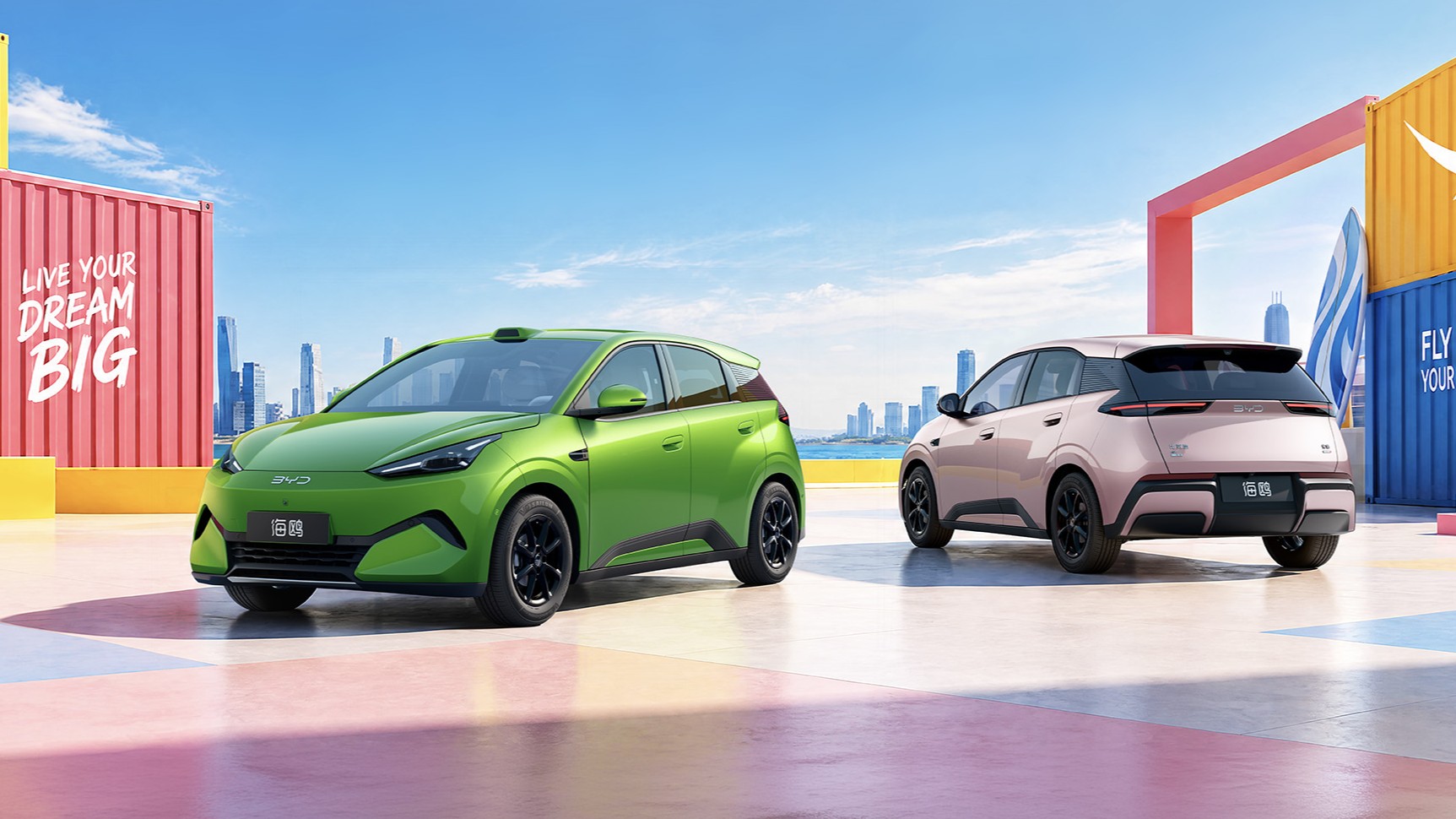
The top trim of the new Seagull is almost the same size as the aging Dolphin but offers more power and equipment compared to the base trim Dolphin at essentially the same price in China. I expect the Dolphin will be replaced soon.
Big Potential Impact Within China And Globally
When looking at Chinese sales numbers, it is important to remember that the game has changed. Due to new regulations this year, Chinese automakers are prohibited from selling below Cost of Goods Sold plus selling and administrative expenses. As such, no US-made EVs outside of Tesla could legally be sold in China. Dealers are also prohibited from selling below their cost. And they can essentially no longer register cars for export as “zero mile used cars.” This means that proactive inventory management is difficult under normal circumstances. There is no model year end clearance to make room for new models, as seen in “Toyotathon.” Automakers must preemptively cut deliveries to dealers to prevent stranded older inventory once the new models arrive.
Some have said that BYD developed the new Seagull due to recent sales declines versus the Geely EX2. BYD is fast, but it still takes at least 18 months to develop a new model, which goes back to when the Seagull was still at the top of the sales charts. Due to changes in regulations, the bigger the product update, the bigger the reduction in dealer deliveries and corresponding sales ahead of the new model. This model represents a massive update to BYD’s smallest car. I anticipate the new Seagull to challenge the top of the sales charts again once production ramps up.
Many considered the Seagull to be the first “real” inexpensive EV in China. There were less expensive cars before, like the Wuling Hongguang MINI EV, but they were not truly highway capable and barely qualified as cars. Now, Europe is trying to relax safety standards to create their own class of small vehicles like that Wuling.
Listening to European automotive executives at the recent Paris Automotive Summit, they clearly sounded outmatched and were advocating for political barriers to weaken competition. Stella Li recently stated that the number one challenge to expansion for BYD is geopolitics. Not demand or technology. If the politicians get out of the way, a lot of people are likely to choose an affordable, capable “real” compact EV like the new Seagull in Europe.
Beyond the politics and nostalgia of Europe, many people in the “Rest of the World” (RoW) are looking to buy their first “real” new car. People seeking to step into a better future, rather than trying to recreate past glory. With cars like the new Seagull, their first “real” car is increasingly likely to be an EV. An EV that many might also consider here, if given the chance. In places where customers have the freedom to choose without protectionist distortions, I expect the competition to step up and the progress to accelerate. In the process, those countries could leapfrog legacy markets in EV adoption with affordable, attractive cars.



Comments
No approved comments yet. Be the first to comment.
Leave A Reply