Insurance Industry Accused of Hiding Climate Risks While Cutting Coverage
Summary
A new report from insurance professionals says the industry is repricing policies, excluding climate risks, and withdrawing coverage rather than warning customers about growing dangers. The authors warn that a surge in uninsured, high-risk properties could trigger economic fallout similar to the 2008 mortgage crisis.
For years, I have been writing that the insurance industry will strongly influence the climate change debate, because its mission it to identify risks and price its policies accordingly. You can’t build a new 80 story tower stuffed with luxury condominiums on the edge of an ocean if you can’t get insurance, right? You can’t build a new 5,000 square foot residence on a flood plain if you can’t get insurance, can you?
According to a new report from Inside Track, a group of senior insurance industry professionals, all our assumptions about the insurance industry can be discarded. Someone once said the business model for insurance companies is to sell coverage and deny liability. Now there is a new wrinkle — selling coverage that excludes climate risks. Here I thought these professional risk managers would force the rest of us to confront the existential dangers we face, but that apparently isn’t so. Just like every other business, they are content to take our money while giving us less and less protection.
The insurance professionals at Inside Track wrote, “We are worried that the risk levels we are seeing either aren’t being communicated to or aren’t being properly internalized by government. Without intervention, these physical risks will translate into major economic risk. The undermining of the mortgage market drove the Global Financial Crisis. We are worried a major increase in uninsured, high-risk properties could manifest in a similar way as climate impacts intensify.”
Don’t Tell Anyone!
This is some heavy duty stuff. In essence, what the Inside Trac folks are saying is that some in the insurance industry are suppressing the information they have so their customers are not aware of the dangers they face. If this sounds to you like the oil and gas industry lying to us for the past 60+ years about the harm using their products causes, you are not far wrong. Here’s more from Inside Track:
If you sit in board meetings at major insurance firms, you might expect that these issues would be at the forefront of the agenda. In reality, they barely make the top three most pressing issues being discussed. Why? Because the industry is confident in its strategy to respond in a way that manages its exposure — namely to
First: reprice, leaving insurance unaffordable to many.
Second: alter or restrict coverage by removing wildfire coverage from buildings insurance, for example.
Third: simply withdraw provision (of insurance) from certain sectors, geographies, and communities, including many farming communities upon whom society relies.
This process has already begun and will now accelerate. The net result will be an increase in uninsured losses for which someone else will have to pay the price. This is not because of any malice of insurers but because this is how our industry is incentivized to operate if we focus on the short term.
Whilst the industry’s response to physical risk is commercially logical over this short term horizon, it creates a situation that should be of deep concern to anyone worried about economic stability and the experience of the communities –including many customers of today — who will face the strongest impacts of climate change.
The High Cost Of Long Term Risks
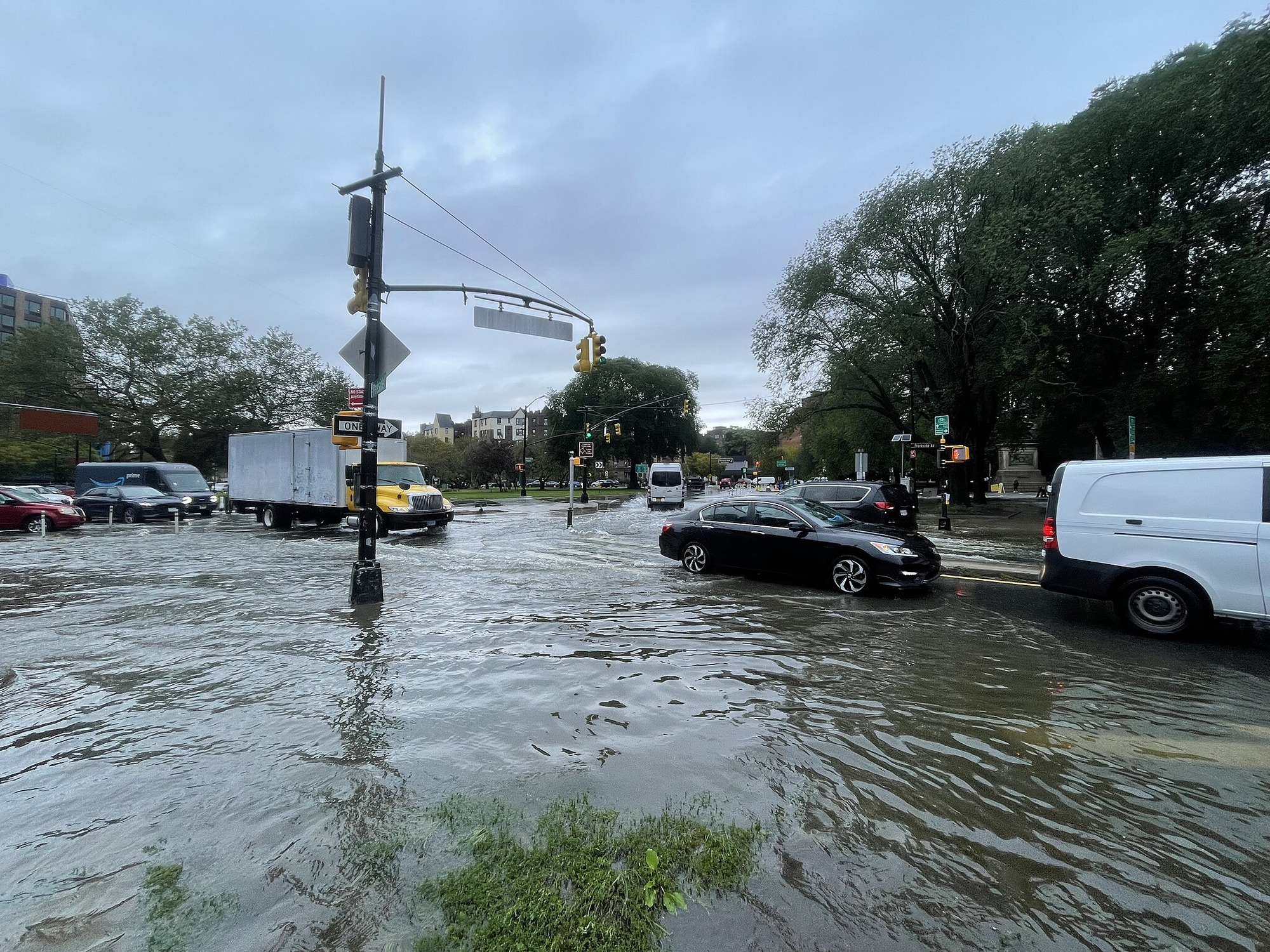
Bloomberg reported on October 13 that Amanda Blanc, the CEO of Aviva Insurance, claims that homes being built in the UK today are already uninsurable due to the increasing risk of flooding. Günther Thallinger, a director at Allianz, has said “entire regions” risk becoming uninsurable due to climate change.
Nicholas Stern, chair of the Grantham Research Institute on Climate Change at the London School of Economics, told Bloomberg, “The people who price risk for a living are warning, from the inside, that our models have underestimated the danger. And that mis-priced risk is building to potentially unmanageable levels.”
Anthony Hobley served as the deputy chair for climate risk and resilience at Howden Group Holdings until recently. On LinkedIn he suggested that part of the problem is that the insurance industry typically writes policies for only one year, a practice that essentially masks longer term risks. “Our pricing skill is only ever deployed twelve months at a time. It does not help clients manage risk over the long term, or stay insurable,” he said.
Readers are already aware that State Farm has responded to losses from wildfires in California by removing coverage from its policies for homeowners in that state. State Farm may be like a good neighbor if your sink leaks and damages your kitchen, but if your home is destroyed by wildfire…..well, it sucks to be you. How’s that for being neighborly?
People living in Florida and Louisiana are finding that hurricane insurance costs three times as much as it did in 2023 — if you can find a company that offers coverage at all. In Florida, many condo associations are required by law to have wind and flood insurance, but the state has done little to make sure affordable coverage is available to them.
Changes In The Insurance Industry
Inside Track put the matter quite clearly when is said, “Rather than take action to help government understand and reduce climate risk or help the general public come to terms with the impacts facing different communities, from farming regions to coastal, mountainous and wildfire prone areas, we are seeing our industry turn more insular.
“In some (but not all) firms, those raising these issues are coming under increasing pressure. For example, natural catastrophe modelers and actuaries are being asked to give a ‘haircut’ to future projections or ‘manage down the numbers’ in order to avoid causing alarm and to keep getting deals done.
“Our industry thrives in environments where risks are relatively predictable. We are moving into a world that is far from predictable and we are neither prepared ourselves or moving to prepare our customers of today, who may suddenly find that they are not our customers tomorrow.”
Capitalism And Its Discontents
At the heart of the matter is the age old truisms of a capitalist economy. Cities and towns can only increase their revenue via taxation. When a developer proposes an 80 story building filled with luxury condominiums on the edge of the ocean, the local government sees dollar signs. It will then pressure the insurance companies to write a policy that will satisfy lenders who are willing to finance that chrome and glass monstrosity. Some insurance company somewhere will be only to glad to take the money and bet it won’t have to pay a claim for at least one year.
The result is that long term risk gets minimized. The local government sees an increase in tax revenue. The contractor makes a profit on the building. Lenders make a profit on their investment. And insurance companies make a profit from the premiums they charge. Pricing in long term risk short circuits the gravy train for everyone, and we can’t allow that to happen, now can we?
Greed Is Not Good
Where I live in Florida, there is an inlet that connects the Indian River Lagoon to the Atlantic Ocean. As I am driving north on A1A toward the inlet, it is not unusual to see a yacht crossing my field of vision. For a moment, it looks like it is gliding along the same pavement I am driving on. Few people ever stop to consider that the level of the water in the inlet is almost equal to the height of the roadway and what that suggests for the future.
And yet, the city I live in is salivating over the prospect of a 500 room hotel a developer wants to build just 10 feet from the edge of the inlet. All it can think of is all the lovely tax revenue it will get if that hotel gets built. Greed really is the root of all evil and will likely prove to be the undoing of the human race. We fail to take a clear eyed view of the future at our peril.


Comments
No approved comments yet. Be the first to comment.
Leave A Reply