Coalition Urges EU Ministers to Reject Counting E-Fuel and Biofuel Cars as Zero-Emission

Summary
A broad coalition of NGOs, cleantech firms, and e-mobility groups has warned EU climate and environment ministers that counting combustion cars running on e-fuels or biofuels as zero-emission would blur market signals and undermine investment certainty. The letter argues the proposed VEEF category would let manufacturers meet CO2 targets without selling a single electric car, undercutting Europe's fastest-growing clean transport solution.
Counting combustion vehicles as clean would blur the market signal and bring back the very uncertainty that carmakers, suppliers, and investors cannot afford. Manufacturers could meet their targets without selling a single electric car.
Dear Climate and Environment Ministers of the European Union,
We, a broad coalition representing non-governmental organizations, think tanks, energy providers, renewable and cleantech industries, and the e-mobility sector, are writing to express our concern over the current direction of EU discussions on the revision of the cars and vans CO₂ emission standards regulation.
Road transport remains the primary driver of Europe’s oil dependency. This structural vulnerability costs the EU hundreds of billions of euros annually, weakens our economy, and leaves citizens exposed to geopolitical shocks. The second fossil fuel crisis in just four years has already added more than €50 billion to Europe’s energy bill, hitting households and businesses hard.
Our continued reliance on fossil fuels also accelerates the climate crisis. This summer, Europeans paid the price as successive heatwaves brought record temperatures, devastating wildfires, and severe droughts across the continent. Transport remains the EU’s biggest emitter, with cars and vans alone accounting for 16% of total CO₂ emissions.
Yet while the market is moving rapidly, political discussions are falling out of touch with reality.
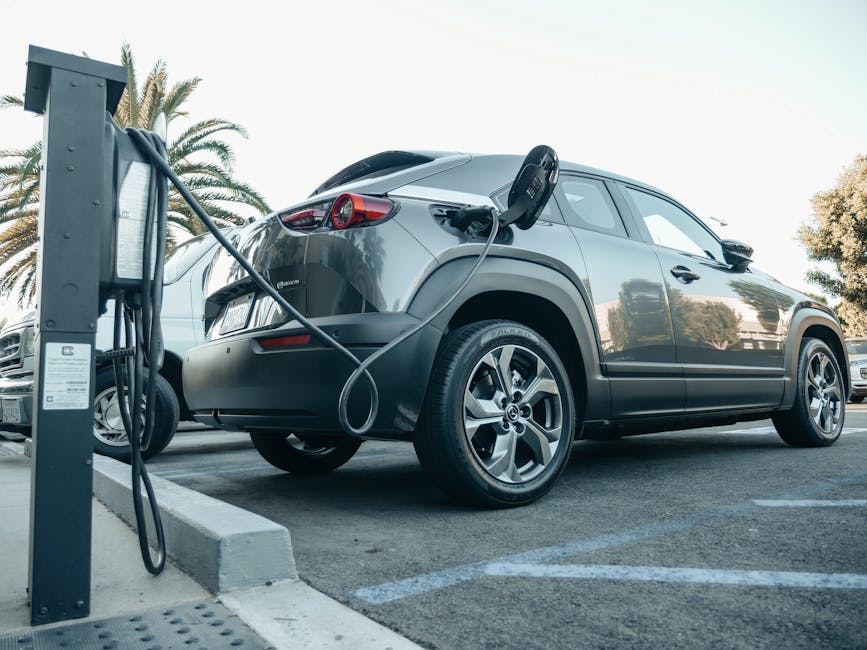
Europe already has a mature, increasingly affordable and readily available structural solution in electric vehicles – which are also the most effective way to shield consumers from volatile fuel prices. Electric vehicles are scaling fast, reaching a record 27% market share in the third quarter of 2026 in the EU.
Instead of building on this momentum, discussions in the Council on the car CO₂ regulation threaten to slow the EV trajectory and inject uncertainty for companies and consumers. Most concerning is the proposal to create a new category for combustion cars running on e-fuels and biofuels, so-called “vehicles running exclusively on eligible fuels” (VEEFs), and count them as zero-emission vehicles.
Too much attention is being paid to combustion-based technologies, distracting from the electric future. Cars running on these fuels still burn fuel in a combustion engine; treating them on par with battery electric vehicles would create a false and unfair equivalence. Under this proposal, manufacturers could meet their targets without selling a single electric car.
Counting combustion vehicles as clean would blur the market signal and bring back the very uncertainty that carmakers, suppliers, and investors cannot afford. It would penalize businesses that are scaling up today and jeopardize the €200 billion already invested in the battery-electric transition. Europe cannot compete globally on electric cars if targets are weakened and undue credit is given to e-fuels, biofuels and hybrids.
We must reset this narrative on vehicle electrification. Europe’s clean industry needs investment certainty and regulatory stability. We therefore call on Climate and Environment Ministers to safeguard the car and van CO₂ targets adopted just three years ago, reject any weakening of the 2030 and 2035 ambition, and remove the “vehicles running exclusively on eligible fuels” (VEEFs) category.
Now is the time for political leadership. Member States have the chance to ensure this fossil fuel crisis is Europe’s last, and to act decisively to build a clean, sovereign, and affordable mobility system supported by a strong EU clean industry.
Download the letter to see the full list of signatories.
Read the letter. Article from T&E.


Comments
No approved comments yet. Be the first to comment.
Leave A Reply