France and Germany Near Deal on EU Emissions Rules, but EV Transition Details Remain Unsettled

Summary
France and Germany have been negotiating flexibility in the EU's 2035 zero-tailpipe-emissions mandate, which effectively requires a full shift to battery electric cars. A draft agreement expected October 15 stalled after Germany's Social Democratic Party objected to weakened environmental targets, leaving the final deal unresolved.
There is an old expression that goes like this: “Everyone complains about the weather, but nobody does anything about it.” There is a corollary to that adage: “Everybody knows we have to stop polluting our environment, but nobody wants to be first to do something about it.”
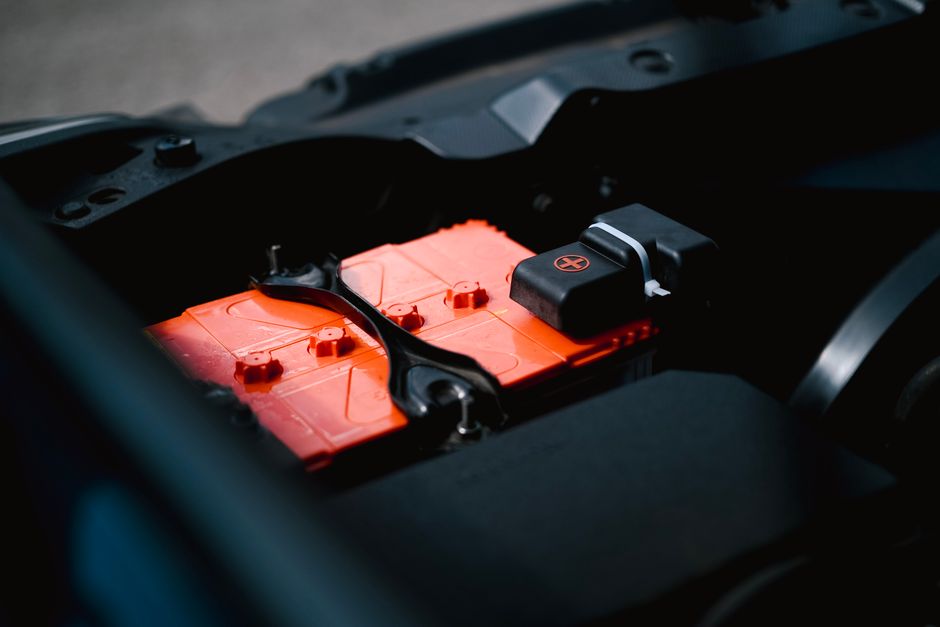
A case in point comes from Europe this week. The EU currently has a goal that calls for all passenger cars sold in 2035 to have zero tailpipe emissions. There is only one way to make that happen — a transition to 100 percent battery electric cars. No plug-in hybrids with range extender gasoline engines, and no mild hybrids with 0.74 kWh batteries.
Germany would love to see that happen, except for one thing. It is the largest manufacturer of automobiles and trucks in all of Europe, which means the auto industry is a large part of the German economy. It is common knowledge that Volkswagen Group, facing lower demand for its cars, is planning to prune up to 100,000 jobs over the next few years and possibly close four factories in Germany.
That will create a ripple effect throughout the German economy. Every job in the auto industry supports up to six other jobs outside the industry in sales, banking, insurance, advertising, and auto repair. Add it all up, and what Volkswagen decides to do could impact half a million workers in Germany.
Readers are familiar with the conundrum that surrounds the transition to electric vehicles. Legacy automakers depend on the profits from selling conventional cars to pay for the investments they need to make in electric vehicles, but those conventional vehicles need to be eliminated as quickly as possible, because the Earth is getting hotter and hotter.
I confess as a writer, it is easy for me to say what needs to be done; I don’t have to win elections to keep my job. Balancing the demands of political constituents is a tough assignment, one I know I would be lousy at it.
A Tentative Agreement
According to Politico, France and Germany have been holding high level discussions this year in an attempt to reach agreement on the EU’s “Made in Europe” rules. The discussion has also focused on creating flexibility for carbon dioxide emissions reductions. A draft agreement between the two countries was expected to be signed on October 15, but Germany’s Social Democratic Party, the center-left junior partner in the ruling coalition, objected because it omitted key environmental targets the SDP considered vital.
“A final agreement has yet to be reached,” a German government spokesperson said. In the proposed deal, Germany would accept stricter “Made in Europe” criteria for the automotive sector — a key French demand — in exchange for weakening the combustion engine ban — something of vital concern to Germany.
“In light of the significant technological, economic and geopolitical changes since the existing regulatory framework was established, the Automotive Package should strike a better balance between climate objectives, industrial competitiveness, technological development and the strengthening of European value creation,” the two countries wrote in a draft agreement seen by Politico. “Based on the Franco-German Ministerial Councils in 2025 and 2026, Germany and France therefore propose a balanced negotiating package combining ambitious CO₂ reduction targets with additional flexibility and targeted incentives for European value creation.”
At the present time, the EU is calling for a 100 percent reduction in carbon dioxide from exhaust emissions by 2035, but there is a provision that allows manufacturers to earn up to ten percent relief from the rule through initiatives like offsets and investments. Under the proposed deal, Politico says, France and Germany want to soften the 2035 target to 90 percent, and offer a further 10 percent leeway in exchange for investments in alternative fuels.
A Different Take
Yet German newspaper Der Spiegel has a different interpretation. It claims that when Germany and France talk about a relaxation “by a further ten percentage points without compensation,” what they really mean is that the 90 percent in the EU Commission’s proposal is to remain, with the only change being that alternative fuels will account for that 10 percent reduction. As a result, manufacturers will not have to offset that 10 percent at all. Confused? So are we, but it might be wise to accept the interpretation of a news source that speaks German rather than a US publication. In any event, the final agreement is in flux and what it will say is anyone’s guess.
The devil in the details, of course. What constitutes an alternative fuel? What about fuel made from algae, a scam that Exxon pulled for more than a decade, knowing it was 100 percent Grade A horse puckey? Or hydrogen fuel cells that rely on hydrogen made from methane? There is a lot of talk about e-fuels made with excess renewable energy, but with demand for data centers skyrocketing, will there be any spare renewable electricity laying about to make e-fuels with?
Porsche has poured more than $100 million into e-fuel production in Chile over the past 5 years. It is seeking a way for its customers to continue driving their 911 Club Sport models in the future, even if gasoline is no longer available. “The potential of e-fuels is huge. There are currently more than 1.3 billion vehicles with combustion engines worldwide. Many of these will be on the roads for decades to come, and e-fuels offer the owners of existing cars a nearly carbon neutral alternative. As the manufacturer of high performance, efficient engines, Porsche has a wide range of know-how in the field of fuels,” said Michael Steiner, head of research and development at Porsche.
Both France and Germany agree that public funds should be devoted to supporting “Made-in-Europe” goals, particularly in the European auto manufacturing sector. “A central element of the package should be a stronger link between public funding and European value creation,” the current document states, according to Der Spiegel. However, that rather vague statement is not further clarified anywhere in the document.
Push Back Is Swift
Environmental groups have been quick to criticize the document as presented. Susanne Goetz of Transport and Environment said. “Germany and France are making a historic mistake. This agreement drastically slows down the sales of electric cars.” There is also skepticism from the Parliament: “This draft is not sufficient.” Tiemo Wölken, a member of the European Parliament told Der Spiegel. He added that less ambition in carbon dioxide reduction without any compensation makes achieving climate targets in the transport sector “unlikely to impossible.”
What will the final agreement look like? Who knows? The process reveals how difficult it is to craft a consensus, even after Europe suffered tens of thousands of premature deaths due to historically high temperatures this summer. Recent strong gains in Germany and France by radical right wing political parties who pooh pooh the whole climate emergency will make reaching a consensus more difficult.
The Earth is not waiting, however. By the time humans figure out what the right thing is to do, it may be too late to save our overheating planet.

Comments
No approved comments yet. Be the first to comment.
Leave A Reply