Florida Weighs Flying Car Research Against EV Charger Funding as Tesla Unveils Roadster Stunt
Summary
Florida's state government reportedly wants to redirect federal money meant for electric vehicle chargers toward flying car research, baffling EV advocates. The controversy comes as Tesla unveiled a theatrical second-generation Roadster prototype featuring air jets and hovering maneuvers.
As a child of the 1960s, I grew up with dreams of a high tech future, so different from my simple rural family lifestyle. In part, that fondness for the future was drawn from the television show, The Jetsons, with its flying cars and robotic home helpers. As I grew into adulthood, I came to understand that social change happens incrementally and that cartoon flying cars would only become a norm if many other innovations came first.
I’m reminded of a Nietzsche quote when I think about this lunacy. “Sometimes people don’t want to hear the truth,” Nietzsche said, “because they don’t want their illusions destroyed.”
That tendency toward illusion continued this week with electric car maker Tesla. CEO Elon Musk revealed the second iteration of the Roadster, and many people had been excited to see what the specs would be. After all, didn’t we enjoy memorable times in our youth in sports cars? Okay, Ferraris they weren’t. But what about riding with the top down in a Miata or an MG? The wind would caress our cheeks. The aromas would be awakening — so different than the enclosed capsule of our everyday middle class automobiles.
But what Musk unveiled is, um, ludicrous in his Roadster “prototype with intent.” In another one of his moves that threw pragmatism to the rafters, he invited the Texas live in-house audience to watch a roller coaster display in which the reimagined Roadster flew into the air, twisted and righted itself like a cat, used air jets to land, and then continued on its rocketed trek.
(YouTube video of Musk’s Roadster reveal)
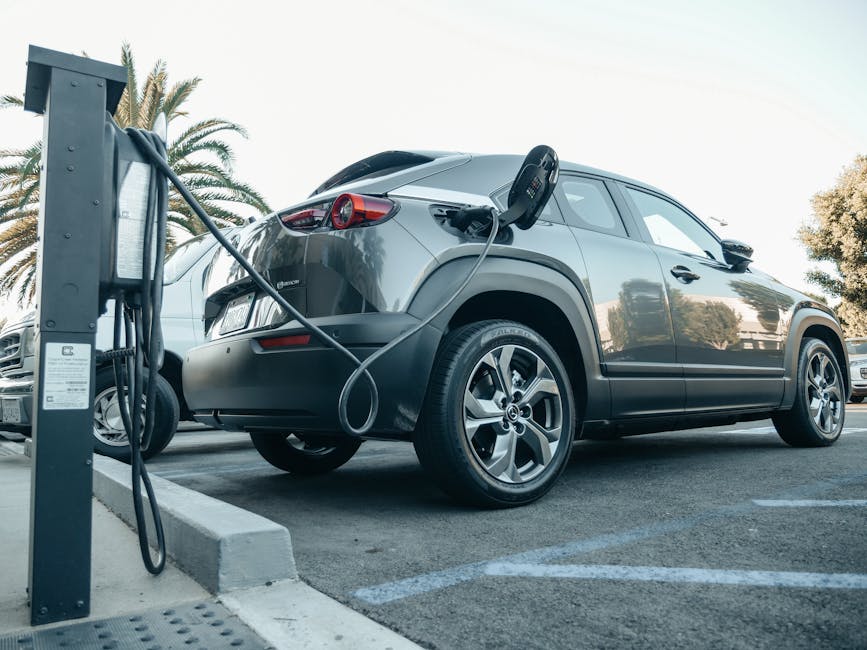
It was eerily similar in intent to the vision of the Florida DOT, which reportedly has plans to build what it calls an “Aerial Highway Network.” It would include places the futuristic aircraft can charge, take off, and land. That’s the trajectory of Florida innovation. Now, mind you, the state hasn’t used its $197 million in federal grant money for new chargers for electric cars and trucks.
It seems some innovation is more pressing than others.
“The Florida Department of Transportation will not waste taxpayer dollars and spend it on everyday passenger vehicles,” the DOT wrote in its flying-cars-are-cool report.
Pittman offered a succinct primer on the 2021 Bipartisan Infrastructure Law, which included language to expand the nation’s fast-charging network for electric cars and trucks. The provision called for adding more chargers within a mile of all interstate highways. Businesses that received the funding, such as Buc-ees and Wawa, would get enough to cover about 80% of the costs. They would be required to put up the other 20%.
Meanwhile, funding for the Florida flying car has yet to be announced.
Musk has offered what CleanTechnica’s Steve Hanley has called “the stupidest display of what a deranged mind can create I have ever witnessed.” Instead of expanding the fine Supercharger network and providing more charging access to everyday drivers, Musk has, again, taken the path of imagination and fantasy. Of hype and hyperbole.
Is the Roadster media announcement little more than a mechanism to boost Tesla’s wavering stock prices? It isn’t coincidental that the reveal came at a time when Musk’s right-wing activities have soured thousands of possible Tesla customers. Musk’s magical car is likely little more than a PR stunt, and it’s also a bit sad, as the company has real potential to alter the future of transportation with its electric vehicle infrastructure.
Unfortunately, Musk, who seemed to be a visionary, is little more than a charlatan. And the state of Florida is following his example with flying flourish.




Comments
No approved comments yet. Be the first to comment.
Leave A Reply