GM Says It's Listening on Hybrids, But Its Track Record Suggests Otherwise
Summary
GM's propulsion engineering VP says hybrids are now part of the plan and insists the company isn't tone deaf to customers who want them. Yet GM has never offered a full hybrid like the Prius, relying instead on mild-hybrid systems and a truck-heavy lineup that critics say prove the opposite.
Mike Anderson, vice president of propulsion engineering at General Motors, told CNBC something quite extraordinary this week. He said, “It’s fair to say that [hybrids are] part of the plan. We’re not tone deaf to our customers. We know what they want and we want to give that to them as quickly as we can. Our long term vision is an all-electric future. That’s our goal. That’s the end state, but it’s going to be a journey that involves technology diversity.”
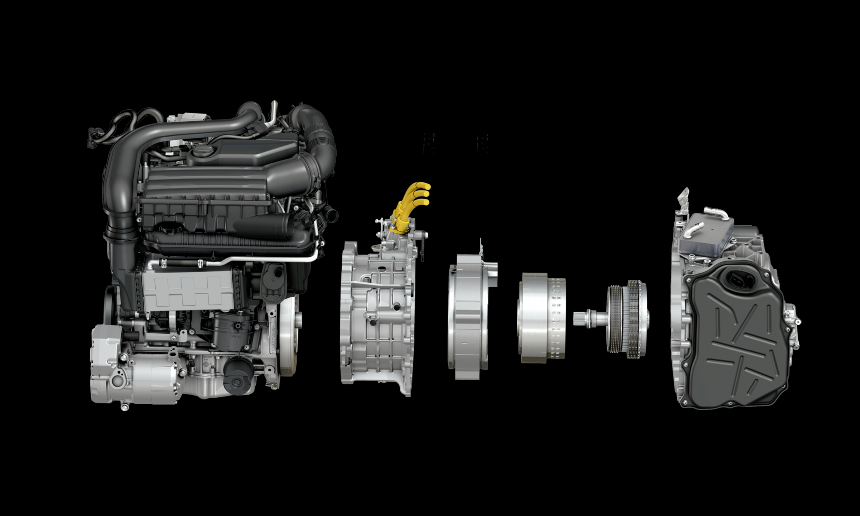
Anderson is a 35 year veteran at GM, so he obviously knows a thing or two, but his statement itself is an example of what tone deafness sounds like. General Motors has never offered hybrids like the Toyota Prius to its customers. It did once offer “mild hybrids” that had an alternator/starter incorporated into the automatic start/stop system. Since it was connected to the engine by the accessory drive belt, it was able to add a few ft-lbs of torque now and again, primarily when starting from rest. A small bit of regenerative braking was baked in as well.
The company claimed it boosted city mileage by 13 percent or more, but only in dense commuter traffic where stop lights or stop signs were prevalent. Outside of those situations, it was essential useless. Just how wimpy the “mild hybrid” concept was is illustrated by the battery chosen for the system — a tiny 0.45 kWh lithium ion battery supplied by Hitachi.
The complete system added 100 pounds to the weight of the vehicles that used it. In essence, it was little more than eyewash designed to bamboozle gullible customer into believing they were helping to address the climate crisis while burnishing GM’s reputation as a company that cares about the environment.
I know someone who is a retired GM engineer. He tells me he advocated for using the Voltec powertrain developed for the Chevy Volt in other models — specifically the Impala and Malibu sedans — but his bosses looked at him like he had lost his mind. Instead, the company axed those sedans from their lineup and prioritized huge (and extraordinarily profitable) light trucks and SUVs such as the Suburban/Escalade and Chevy Silverado.
It should be pointed out that Ford and Stellantis also stopped producing sedans a decade or so ago in order to focus on SUVs and trucks with higher profit margins. Kia, Hyundai, Honda, and Toyota still sell sedans. Why did the Big Three all decide to stop doing so all at the approximately the same time? Was there collusion involved? You are free to make up your own mind on that question.
The Footprint Rule
Part of the explanation traces back to the exhaust emission rules the Obama administration advocated for following the global financial meltdown in 2007. As a condition of receiving a government bailout, GM promised on bended knee that it would use the money from Uncle Sugar to build more small, fuel efficient cars. The ink was barely dry on the bailout deal before the company sent a giant FU to Obama by cutting back on sedans and building more SUVs and light trucks.
The villain of the piece was the so-called “footprint rule” the companies insisted on in their bailout talks with the government. Simply put, it allowed larger and heavier vehicles to emit more tailpipe poisons. The automakers said “Thanks for all the lovely money, Barack. Now we are going to stop building small cars altogether and concentrate on vehicles that can spew more crud out of their exhaust pipes because of the lovely footprint rule we slipped into the final agreement.”
Plug-In Hybrid
Two years ago, GM CEO Mary Barra piously told the press that her company would bring a number of plug-in hybrids to market in 2027. Presumably, they would leverage the Voltec powertrain that has been gathering dust in a GM warehouse somewhere in South Succotash for the past ten years. Since then, the current administration has moved exhaust emission rules back to the days when the PCV valve was big news.
Before that, GM was all in on battery electric cars. Now Barra is talking out of the other side of her mouth and touting hybrids. Is she talking about real hybrids like Toyota sells or is she talking about fake hybrids like the “new” Nissan Rogue Hybrid that has such a minuscule battery that the onboard gasoline engine will need to run almost constantly to keep it charged? We suspect it will be the latter, which means yet another marketing ploy designed to befuddle customers, who are already confused,
What Is A Hybrid?
For those who fall into that category, here is primer on hybrids. Some have tiny little batteries and rely on a gasoline engine most of the time. Others have a battery you can actually see without a microscope and are capable of driving a few miles with the aid of a gasoline engine, but the engine still powers the wheels when needed — which is most of the time. They are called parallel hybrids.
In series hybrids, the engine is not connected to the wheels in any way. The Chevy Volt was a series hybrid with about 50 miles of battery-only range, although there was a connection to the driven wheels that provided a”limp home” capability in the event of a complete failure of the electric powertrain. Extended range EVs are all the rage in China, but of course Americans can’t be trusted with Chinese technology, so they are virtually unknown in the US. EREVs typically have a battery-only range of 70 to 100 miles, which means the onboard gasoline engine seldom gets used.
Then there are true electric cars, which rely exclusively on battery power. Many customers are still leery about that newfangled technology, although the latest market research indicates younger drivers are less terrified by the idea of driving on electrons instead of molecules than their parents are.
Lobbying In The Background
The other thing readers need to keep in mind is that GM has been a fierce opponent of California’s ability to set its own emissions rules that are stricter than federal standards. It would not be a surprise to learn that GM has been lobbying in the background for the rollback in emissions rules recently announced by the Tramp administration. Those new rules will allow GM to build more V-8 powered cars and trucks with massive front ends that look like they prow of an ocean going oil tanker.
The message here is that GM has no plan for the future other than maximizing profits, which raises this important question: Is the company tone deaf or is it actually brain dead?


Comments
No approved comments yet. Be the first to comment.
Leave A Reply