South Korea Unveils 10-Year Green Plan to Add 100 GW of Renewables by 2030
Summary
South Korea announced its K-GX strategy, a 10-year plan to add 100 GW of renewable energy and upgrade transmission lines while investing nearly $750 billion toward a carbon-neutral economy. The plan prioritizes decarbonizing heavy industries such as steel, petrochemicals, and cement, including a hydrogen-based green steel demonstration project producing 300,000 tons by 2030.
There are a significant number of people who loathe renewable energy. The so-called president of the United States is one, but he is far from alone. It’s hard to understand what the objections are to renewables. What could possibly be wrong with generating electricity with fuel that is available everywhere and essentially free?
Wouldn’t you have be some kind of nut to prefer drilling for oil and methane in countries that can shut off your supply at any time on a whim, building massive transmission systems that are subject to a staggering number of leaks, and then subsidizing the whole operation with a military that costs $1,500,000,000,000 every year to protect your supply lines?
The Middle East mess caused by a brain dead potentate, who is one of the greatest narcissists to ever live, has caused massive spikes in the cost of fossil fuels, threatening the economies of many nations. South Korea is one of them, and its leaders have decided to take bold, decisive action to break their dependency on fossil fuels.
A Green Transformation In South Korea
This week, the government announced a Korea — Green Transformation (K — GX) Strategy, which is a 10 year plan to move forward toward a carbon neutral economy while achieving sustainable economic growth.
One objective is to add 100 GW of renewable energy to the nation’s grid by 2030 and upgrade transmission lines to carry that electricity to wherever it is needed. South Korea had a total installed capacity of 160 GW as of 2024 — 26 GW from nuclear generating stations. Its largest demand for electricity — 104 GW — occurred during a heat wave in August of this year.
The government said this week it expects to fund the plan by investing nearly $750 billion (€665 billion) over the next ten years to bring it to fruition. It will prioritize investments that help decarbonize the country’s major greenhouse gas emitting industries — steel, petrochemicals, cement, semiconductors and displays, and refining.
Green Steel
In the steel sector, the government is promoting a demonstration project that will produce 300,000 tons of green steel by 2030 in a process that uses hydrogen instead of coal to reduce iron into steel. That is expected to grow to 2.5 million tons by 2036. Eventually, all steel made in the country will use hydrogen reduction no later than 2050, assuming the plan is successful.
Regular readers know the devil is in the details. Hydrogen can be created at scale by reforming methane, an energy intensive process that creates its own climate emissions, or by using renewable energy to split water into ts components, hydrogen and oxygen. We trust the government is focusing on the electrolysis powered by renewables route.
Third Largest Economy
If everything goes according to plan, South Korea expects to become the third largest green economy in the world. “The green transition is a sure strategy for the future that will secure international competitiveness while protecting people’s lives and livelihoods from the climate crisis,” President Lee Jae Myung said during a public briefing on Wednesday.
He added that the green transition would strengthen Korea’s competitiveness while protecting people from the effects of climate change. “We must break away from the practice of being followers and become designers and leaders of the green market,” Lee said.
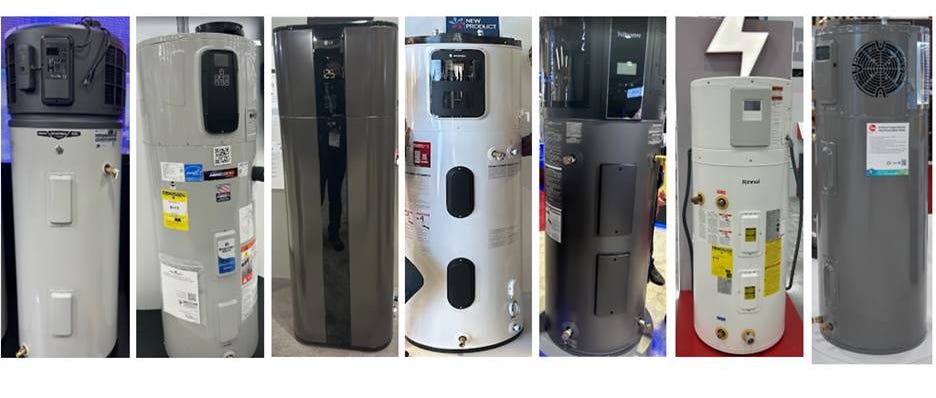
Hanwha Qcells will take the lead in clean power generation materials and perovskite tandem solar cells. POSCO Holdings will focus on decarbonizing strategies in steel making, while LG Electronics and Samsung Electronics will put their collective shoulders to the wheel in a joint project to expand the use of heat pumps and other low carbon solutions for residential spaces.
Electric Transportation, Batteries, And Solar
In the transportation sector, the K — GX plan is designed to promote the transition to electric and hydrogen powered vehicles. The goal is for them to be 70 percent of the new car and truck market by 2035, with the aid of new subsidies for electric vehicles manufactured with low carbon steel. Those EV subsidies could also vary by region, depending on how much renewable energy is available in each.
The government also wants to increase South Korea’s share of the global EV market. It currently ranks 8th in the world with a 3.8 percent market share, but is expecting to become the third largest supplier of EVs by 2035. Reaching that goal will required an overhaul of the EV subsidy system, a new electricity fuel subsidy, greater support for drivers switching from internal combustion engine vehicles, and a battery leasing program, according to Korea Times.
Electric cars depend on batteries, and South Korea wants to preempt China in that field. As part of the K — GX initiative, the government plans to commercialize high performance solid state batteries by 2027 and focus on low cost sodium-ion batteries by 2030. Readers may be excused for thinking those two targets should be reversed.
South Korea also wants to break China’s dominance of the solar panel market by becoming the first nation to commercialize and mass produce high efficiency tandem solar cells by 2028. Taking the lead in that technology, the government believes, will allow South Korea to become the largest supplier of next generation tandem solar cells by 2035.
K — GX calls for expanding the power grid to accommodate more renewable energy. Construction of HVDC transmission lines and replacement of existing transmission cables with higher capacity wires will be essential to that process.
More than half of the climate financing will be allocated outside the Seoul metropolitan area, while at least 70 percent will be directed to small and medium size enterprises and mid-size companies. The government plans to issue its first green bonds in 2028 and expand tax credits for domestically produced key components and equipment used in solar power, wind power, and secondary batteries.
Nations Rise And Nations Fall
The difference between where South Korea and the US are heading could not be more stark. One is taking bold but necessary steps to address both its economy and the need to live in a sustainable world; the other is heading toward a cliff and pressing hard on the accelerator. One is likely to become a leading global economy; the other is likely to become irrelevant.
South Korea recently beat back an attempt to seize the government by authoritarians, while the US has embraced fascist thugs at all levels of government. Today, South Korea is behaving like a rational adult, while the US is dominated by someone whose favorite world is “me.” If you are inclined to bet on the future, which country would you expect to be a global leader ten years from now?


Comments
No approved comments yet. Be the first to comment.
Leave A Reply