Why EV Ownership Is More Convenient Than You Think: Home Charging Explained

Summary
A new commentary argues that electric vehicles are actually more convenient than gas cars for most local driving, since home charging eliminates weekly gas station trips, oil changes, and emissions inspections. It walks through practical home charging setups, including 220V outlets and Level 2 chargers, and their typical installation costs.
Some reasons why you shouldn’t be worried about buying an electric vehicle.
Everyone knows that electric cars are much more inconvenient than gas cars. After all, there is a gas station on every corner and it only takes 5 minutes to fill up. Electric chargers are rare, and it takes at least an hour to charge.
Wrong: If you have access to 220 volt electricity or a L2 charger at home or work, an electric vehicle is much more convenient than a gas car for 300 miles per day of local driving.
In principal: In the evening, you drive into your garage, carport or driveway and take 10 seconds to plug in, the next morning, you have a full charge and take 10 seconds to unplug.
Compare that with a gas car. You probably have to make a couple of special trips per week to the gas station, put in your credit card, grab the smelly nozzle, put it in your car, and wait five minutes to fill. Then you return the smelly nozzle to the pump.
With the gas car, every 3,000 miles, you need to go to a Jiffy Lube and sit in their smelly waiting room for an hour while they change your oil.
With the gas car, every year, you need to go to an inspection station and wait an hour in their smelly waiting room while they do an emissions check.
These three tasks are all eliminated with an electric vehicle, which makes it much more convenient for local driving.
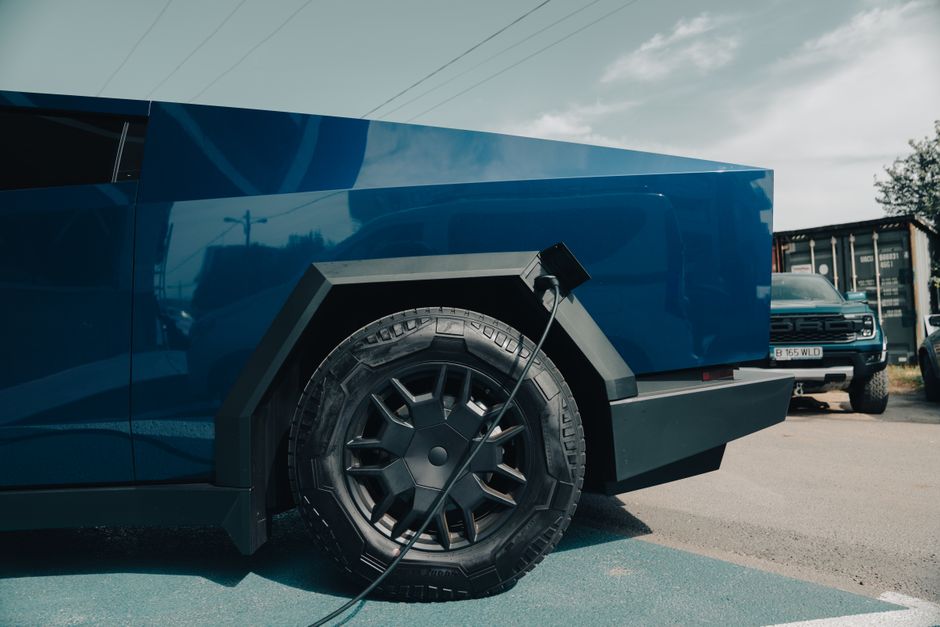
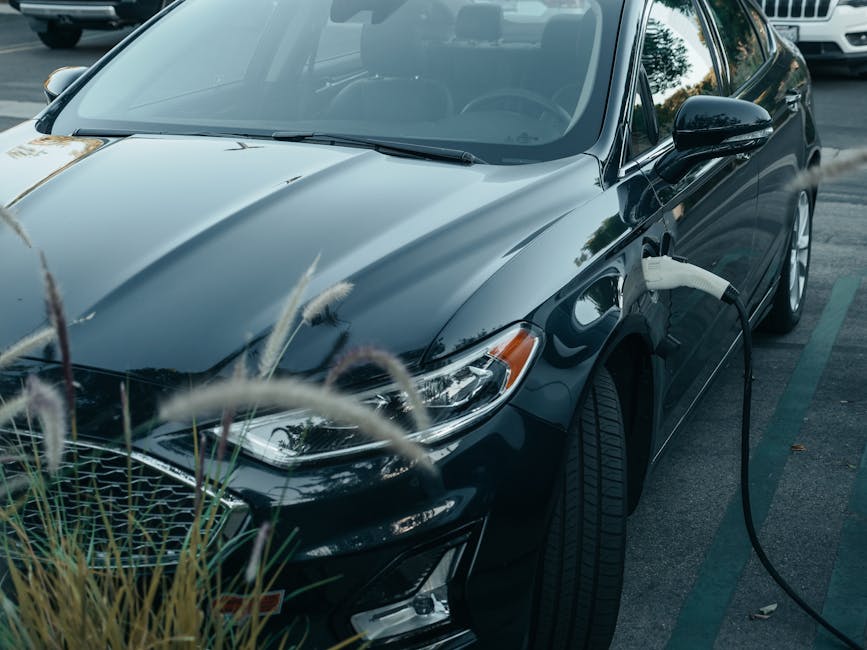
How do you charge at home? Most electric cars come with an EVSE (Electric Vehicle Service Equipment) cable. If not, you can buy one for ~$200. On one end of the cable is the plug that goes into your car, and on the other end is an interchangeable plug. The one that comes with most cables is a standard 110V plug, but for $40 you can buy a 220V Nema 14-50 plug. Almost all RV parks have NEMA 14–50 sockets. If you have 220V service in your garage, you can have one installed for about $200. Northern Lights Electric installed one in my garage in Three Lakes Wisconsin for $130. An electrician in Saint George, Utah, installed one in our garage there for $250. It cost about $500 to have 220V service run to my garage in Lindon, UT. I had a L2 charger installed there for another $700, which I needed for my first Nissan LEAF in 2014. The L2 charger is not necessary if you have an EVSE, you only need a NEMA 14–50 outlet.
L2 charging gives you about 28 miles of range in one hour. Most EVs these days have more than 300 miles of range — so, in principle, you will charge from dead empty to full in ~11 hours. However, I am rarely at dead empty and I normally only charge to 80%, so usually I am only charging from one to five hours. Note: If you want your battery to last as long as possible, don’t charge over 80% or let the charge go below 20%. This is easier to do if you have a bigger battery.
L1 (110V) charging only gives you about 4 miles of range per hour. In principal, if you plug in next to your shaver in the bathroom, it would take three days for a full charge. However, if you drive fewer than 100 miles/day, this works. We have friends who would need to upgrade the electrical service to the whole house to get 220V service to the garage, and they have gotten along fine with L1 charging. This works especially well since they have a second car. They also have a clothes dryer near the garage. They are able to use its 220V service or nearby Superchargers in special cases.
What if you live in a condo or other place where you can’t install your own charger? With considerable effort, my brother was able to get 220V service for L2 charging in the garage of his condo. If you have a L2 charger at work, it solves the problem. Also, there are many Superchargers in cities, and if you live near one, you can fill up there just as you would with a gas station.
What Car Should You Buy?
The lowest price Tesla is the Model 3 RWD with seating for five, a range of 321 miles, at a price of $37,000 (see mine in the lead photo). That is plenty of range for both local and cross-country driving. However, if you want to up the range to 363 miles, you need to get the Model 3 Premium for $47,500. For only $3,000 more, you can get the base Model Y. It costs only $40,000. (See the photos below.) With the Model Y, you get a lot more room for baggage, you ride a little higher, you get a much bigger power liftgate, and you have the option of a factory-installed receiver/tow hitch, which is the one upgrade I chose because I often carry my ebikes on a rack in back. The standard Model Y seats five, but you can get the optional YL which seats 6 in three rows of captain chairs. I upgraded from my 2019 Model 3 to a base 2026 Model Y recently. You can get the premium Model Y with better external and internal styling and 363 miles of range for the RWD Model. It also comes with numerous other features, like faster charging, better audio speakers, and a small video screen for the rear seat passengers for another $5,000, as shown below. Four-wheel drive is a $2,000 option on all models and does reduce your range a little.
Every Tesla comes equipped with smart cruise control. Unfortunately, autosteer was eliminated recently unless you pay for Full Self Driving. If there is a car in front of you, you essentially have 100% self-driving until you need to make a turn. You have full automation in a traffic jam, where the car will move forward, automatically following the car in front of you.
I’m currently driving a base 2026 Model Y with FSD V14, which now costs $99/month. I can get into my car in my garage or a big parking lot or a Supercharger and without touching anything say, Hey Grok, then verbally say: Navigate me to [nearly any business, my home, or any address I dictate to the navigation]. Then FSD will drive me automatically out of my garage or the parking lot to the location requested and park my car in a parking lot or on the street (but not yet into my garage). I sit back and “supervise,” but seldom must intervene or complain about its actions as it drives.
“Tesla has introduced a new feature called Automatic Collision Evasion, which can autonomously activate Full Self-Driving (FSD) to avoid imminent collisions, even if the driver has not engaged the FSD system. This feature aims to enhance safety by allowing the vehicle to take evasive actions during critical situations.”
Note: In my opinion, Tesla customers that don’t opt in for the $99/month FSD subscription are missing a very important, possibly live saving safety feature.
There are literally 161 different new EV models to choose from in the US today. There are also several EV models that have been discontinued that you can buy used. If you can’t stomach buying a Tesla from Elon Musk’s company, you can choose one of those.
I will present two good alternatives to buying a Tesla: The top selling EVs in the US in 2026 to date right now are as follows. You can see that the Teslas are by far the most sold, but the Hyundai IONIQ 5 and the Toyota bz are reasonable alternatives for Musk haters.
- Tesla Model Y 262,49 1
- Tesla Model 3 106,962
- Hyundai IONIQ 5 5 31,112
- Toyota bz 24,944

Toyota led the movement towards automobiles that are more friendly to the environment with the Prius over 20 years ago. However, they were very slow to offer a compelling pure battery electric vehicle. That has now changed, Toyota’s bz EV has received excellent reviews. I had been a big customer of Toyota gas cars until recently, so I dropped down to the nearest Toyota dealership to see the status of EVs there, as shown in the photos below. I was pleased that the dealer had four bzs in stock and I took one for a quick spin. It had the usual excellent Toyota workmanship, with spectacular acceleration like all EVs. However, the driving automation, like in the Corolla I had rented in the spring, is lame. The lane assist will only work on gentle turns.


If you find any of my articles helpful to you, please use my referral link when buying a new Tesla: https://ts.la/arthur73734 (Be sure to use it when you make your order). Tesla keeps changing the program, but here’s the latest: If you are buying a new Tesla Model 3 or Y and use my link, you will get two months of free Full Self Driving (a ~$200 value) on top of the one month that comes free with every new Model Y right now. This will get you a total of 3 months free Full Self Driving. It will be $99/month after that. For a Cybertruck, you will get $1000 off your purchase price. At this moment, Tesla is offering a year of free Supercharging with the purchase of a new Model 3 Premium or Performance.


Comments
No approved comments yet. Be the first to comment.
Leave A Reply