ESS Inc files Chapter 7 bankruptcy as Stem Inc flags going-concern doubts and sells Athena platform
Summary
US energy storage firm ESS Inc has ceased operations and filed for Chapter 7 bankruptcy, with a court-appointed trustee set to liquidate its assets. Meanwhile, system integrator Stem Inc has raised substantial doubt about its ability to continue as a going concern and sold its core Athena software platform.
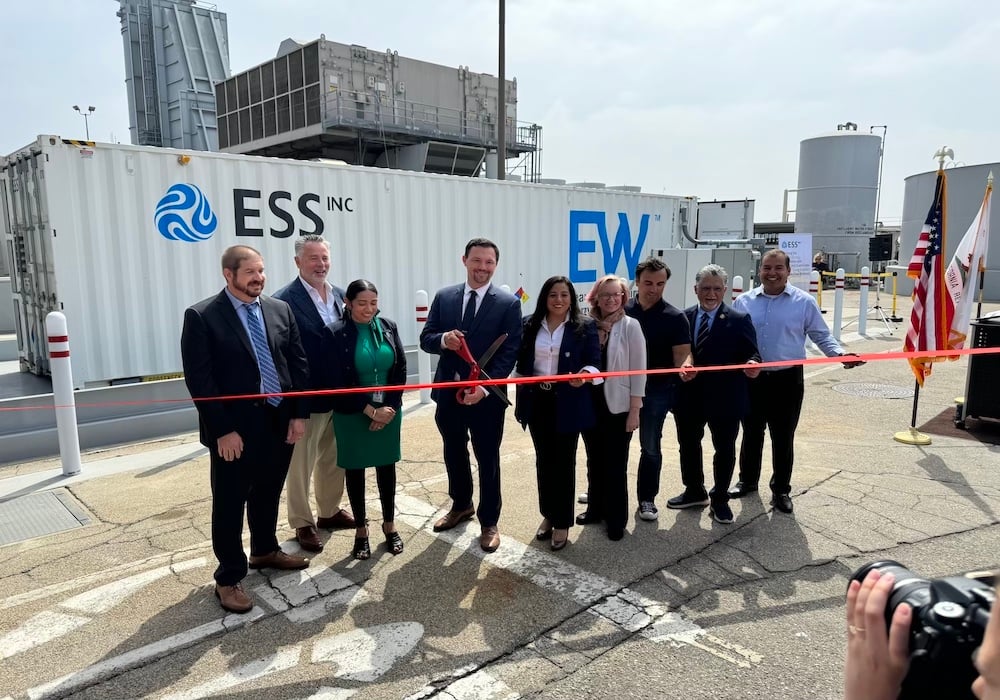
US-headquartered energy storage technology firm ESS Inc has ceased operations and filed for Chapter 7 bankruptcy, while system integrator Stem Inc doubts its near-term ‘ability to continue as a going concern’ and just sold its core software platform Athena.
ESS Inc filed for voluntary petition for relief under the provisions of Chapter 7 of Title 11 of the United States Code in the United States Bankruptcy Court for the District of Delaware, last week (13 November).
A Chapter 7 trustee will be appointed by the Bankruptcy Court and will assume control over the assets and liabilities of the company, and its assets will be liquidated to pay outstanding claims.
‘It is unlikely that holders of the Company’s common stock will receive any payment or other distribution on account of those shares following the bankruptcy proceedings,’ ESS Inc said in its announcement.
It follows ESS Inc being de-listed from the Nasdaq last month. The company was launched in 2011 and spent over a decade trying to commercialise a proprietary iron hybrid flow battery product, before pivoting unsuccessfully to sodium-ion battery energy storage systems (BESS) over the past year.
CEO Drew Buckley gave a candid interview for ESN Premium about this process and the firm’s future in August. He said the iron flow battery technology was not ready for commercialisation, and the company had gone public too early.
Wider price falls for lithium-ion BESS technology and a slower-than-expected demand for long-duration energy storage (LDES) applications were also a factor. Its sodium-ion pivot may have come too late.
Stem Inc also in financial trouble, sells Athena platform
ESS Inc listed via a SPAC merger in 2021, one of a handful of energy storage technology companies to do so around that time and subsequently underperform against expectations.
Another of those is Stem Inc, which has seen its share price fall continuously to now reach a market capitalisation of just US$11.5 million at the time of writing. Stem Inc is a system integrator, typically using lithium-ion BESS and providing software and services to integrate and run projects.
In its recent 10-Q quarterly report with the SEC, Stem Inc said its finances ‘raise substantial doubt about the Company’s ability to continue as a going concern within one year after the date that these unaudited condensed consolidated financial statements are issued.’ ESS Inc said the same thing in an SEC filing earlier this year.
As of 30 September Stem Inc had cash and cash equivalents of $36.9 million and debt of $346.9 million, and saw a $47.9 million loss in the first nine months of the year.
It just sold its distributed battery optimisation and management platform Athena, one of its core assets, to distributed energy resource (DERs) firm Voltus Inc. Voltus just raised a US$225 million Series D to expand its activity in the US and Canada.
The sale of Athena to Voltus generated US$10 million in cash for Stem Inc, which has been trying to pivot away from hardware towards software and services (and did see profitability in early 2025). Selling its core software platform is therefore contrary to that strategy, but may buy it more time to turn the business around.



Comments
No approved comments yet. Be the first to comment.
Leave A Reply