Self-Loading Bulk Cargo Ship MV Yampu Cuts Freight Emissions in Half with 6,758 kWh Battery
Summary
CSL Group and Adbri launched MV Yampu, the world's first self-loading and unloading bulk cargo vessel, powered by a diesel-electric drive and a 6,758 kWh marine battery system. The hybrid ship reduces fuel use by 25% and Scope 1 emissions by over 40% on its limestone route in South Australia.
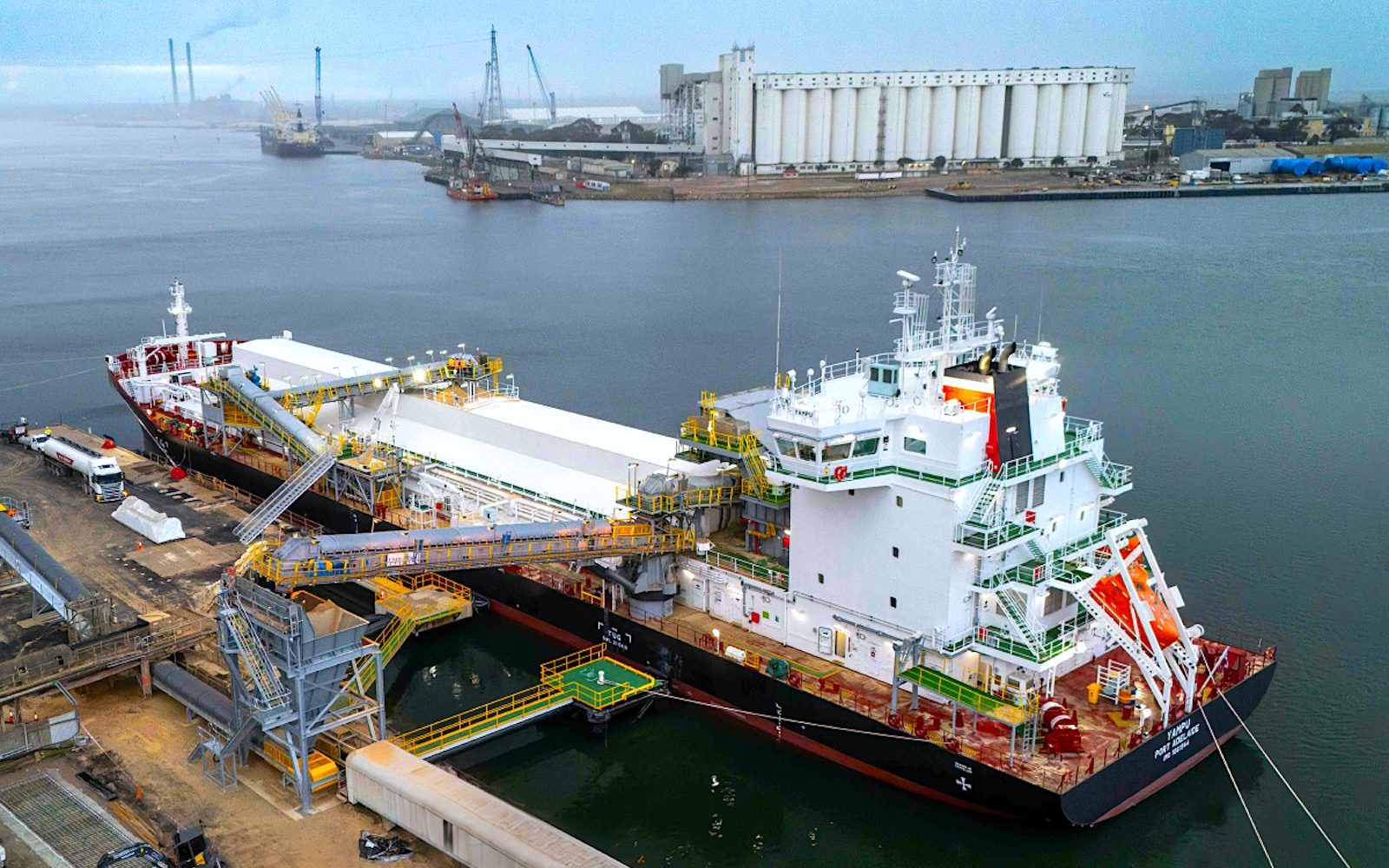
Moving millions of tons of coal, sugar, and other bulk cargo is serious business, and decarbonizing that business presents a number of unique challenges – especially when loading and unloading. That’s what makes the new MV Yampu so interesting: it’s the world’s first self-loading and unloading bulk cargo vessel!
Purpose-built by the maritime experts at CSL Group for aggregate and concrete giant Adbri, the MV Yampu is a groundbreaking 125 meter (~410 ft) vessel powered by a locomotive-style diesel-electric drive system backed by an immense, 131-ton 6,758 kWh marine battery system developed by BESS experts Wärtsilä and capable of putting out more than 600 kW (~800 hp).
The hybrid cargo ship is designed to tackle a grueling routine of ferrying 2.7 million tonnes (~3 million short tons) of raw limestone across a 42 mile-long stretch of Australia’s Gulf St. Vincent each year. The new ship’s route takes it between the Klein Point quarry on the Yorke Peninsula to a cement factory in Birkenhead, Adelaide, saving a big diesel truck the hassle of a 300 mile round trip each time and reducing fuel use by 25% and slashing Scope 1 emissions by over 40% compared to the ship it’s replacing.
“MV Yampu represents a significant step forward in our decarbonization journey, and demonstrates how practical innovation can deliver real environmental benefits while meeting the demands of commercial operations,” explains CSL CEO, Louis Martel. “Every improvement in cargo handling, every enhancement to onboard systems, and every operational innovation has been implemented with one goal in mind: helping our crews perform their work safely, efficiently and sustainably.”
Load up, load out
The onboard batteries allow the MV Yampu to operate entirely on electric power for up to 40% of its journey – but that’s not all they’re powering. The same battery-electric system runs the ship’s massive self-unloading equipment, allowing it to move cargo from hold to shore without relying on diesel generators or mobile conveyors while, at the same time, helping to speed up the loading and unloading process.
“Every day, the limestone carried by MV Yampu will help produce the cement used to build homes, hospitals, schools, roads and major infrastructure projects across South Australia and Victoria,” explains Paul Headd, Adbri CEO. “Being able to do that while further reducing emissions helps Adbri remains at the forefront of lower-carbon cement manufacturing in Australia.”
The MV Yampu’s operators reportedly hope that shore-charging infrastructure will develop alongside more energy-dense batteries, enabling future vessels to transition to fully electric power. The date being whispered for that is a very cautious 2031.
SOURCE | IMAGES: CSL, via New Atlas.

If you’re considering going solar, it’s always a good idea to get quotes from a few installers. To make sure you find a trusted, reliable solar installer near you that offers competitive pricing, check out EnergySage, a free service that makes it easy for you to go solar. It has hundreds of pre-vetted solar installers competing for your business, ensuring you get high-quality solutions and save 20-30% compared to going it alone. Plus, it’s free to use, and you won’t get sales calls until you select an installer and share your phone number with them.
Your personalized solar quotes are easy to compare online and you’ll get access to unbiased Energy Advisors to help you every step of the way. Get started here.

Comments
No approved comments yet. Be the first to comment.
Leave A Reply